Homeowner guide · 2026-05-06
Preparing Your Furnace for the First High Desert Cold Snap
High Desert furnace prep for first cold week of November: tune-up timing, CO detector check, propane pressure, heat exchanger inspection, ignitor testing.
200+ Reviews
5.0 on Google
Accredited
BBB A+ Rating
CSLB Licensed
#998538
Quick answer
High Desert valley winters drop overnight lows into the 20s and occasionally the teens, while higher elevations like Phelan at 3,800 feet and Wrightwood at 6,000 feet hit single digits or below zero. Most carbon monoxide incidents happen during the first cold week of November when furnaces fail at first heating demand after sitting idle since spring. A fall tune-up in September or October catches the failure modes that produce CO, ignition failures, and no-heat calls during the first hard freeze.
High Desert winter is not Minnesota winter, but it is more demanding on heating systems than most homeowners realize. Hesperia, Apple Valley, and Victorville drop into the mid-20s on most December and January overnights, and a Pacific cold front can push valley overnight lows into the teens for two or three days at a stretch. The higher-elevation communities (Phelan, Pinon Hills, Oak Hills, Wrightwood) hit single digits and occasionally below zero, which puts heating systems under real load and exposes any neglected maintenance issue. The pattern we see every November is the same. The system sat idle from April through October. Dust, rodent damage, and condensation buildup happened quietly. Then the first 28F night of the season hits, the homeowner clicks the thermostat to heat for the first time, and either nothing happens or worse, the system runs but produces carbon monoxide because of a cracked heat exchanger that nobody inspected. This guide walks through what to check, when to call us, and what to do if the system fails on the coldest night.
Fall Tune-Up Timing (September or October)
The right time to schedule a furnace tune-up is September or early October, before the first cold front arrives. We start running heating tune-up calls in mid-September and the schedule fills up through October. By the first week of November, when the first 28F night usually hits, same-day no-heat calls jump and routine tune-up appointments push out two to three weeks. There are three reasons fall tune-up matters more than spring tune-up. First, the system has been sitting unused for five to six months. Dust accumulates in the burner compartment, mice and bird nests show up in flue pipes, and condensate from summer humidity (yes, even High Desert summers produce some) can corrode metal components. Second, the failure modes that produce carbon monoxide (cracked heat exchanger, blocked flue, failed flame sensor) are not visible from the outside and require a professional inspection. Third, gas pressure and combustion analysis on a working furnace can only be done with the system actually running, and it is much better to find a problem in 70F October weather with the heat off than at 11pm on a 22F night with the family in the house. Tune-up runs $99-$149 standalone or is included annually with the Service Agreement.
Carbon Monoxide Detector Check
Every home with gas-burning equipment (furnace, water heater, range, fireplace) should have working CO detectors. The first cold week of November is statistically when CO incidents spike, because furnaces run for the first time after a six-month idle period and any cracked heat exchanger or blocked flue starts producing CO that gets distributed through the duct system. Test every CO detector in the house by pressing the test button, and verify the unit is powered (battery or hardwired). Check the manufacture date on the back of the detector. CO detectors have a finite sensor lifespan of 7-10 years depending on model, and a detector older than 10 years should be replaced regardless of whether it tests as functional. Place at least one detector on each level of the home, ideally near sleeping areas. Do not place CO detectors directly above a gas appliance, which can produce nuisance trips during normal startup. Symptoms of low-level CO exposure include headache, dizziness, nausea, and unusual fatigue, particularly when symptoms improve when you leave the house. Higher-level exposure causes confusion and loss of consciousness. If a detector alarms, leave the house, call 911 from outside, and do not re-enter until first responders clear the building.
Gas Pressure Verification (Especially Propane)
Most Hesperia, Apple Valley, and Victorville valley homes are on natural gas through Southwest Gas. Phelan, Pinon Hills, Wrightwood, Oak Hills, and Lucerne Valley homes are predominantly on propane, either underground tanks or above-ground tanks fed by a local supplier (AmeriGas, Suburban, Ferrellgas). Propane behaves differently than natural gas in cold weather. Propane is stored as a liquid under pressure in the tank, and it has to vaporize to flow to the furnace. Vapor pressure drops as outdoor temperature drops. Below about 20F ambient, propane vapor pressure starts to fall measurably, and a tank that is below 30 percent full may not be able to deliver enough vapor to fire the furnace at full demand on the coldest nights. The fix is two-part. Keep propane tanks above 30 percent full through the winter, and call the supplier in early November to schedule a refill before peak demand. Natural gas pressure is regulated at the meter and stays consistent, but a partially blocked or rusted gas line at the appliance can drop pressure at the burner and cause ignition failures. Combustion analysis during a tune-up measures both gas pressure and the resulting flame characteristics, which is the only reliable way to verify the burner is getting what it needs.
Heat Exchanger Inspection
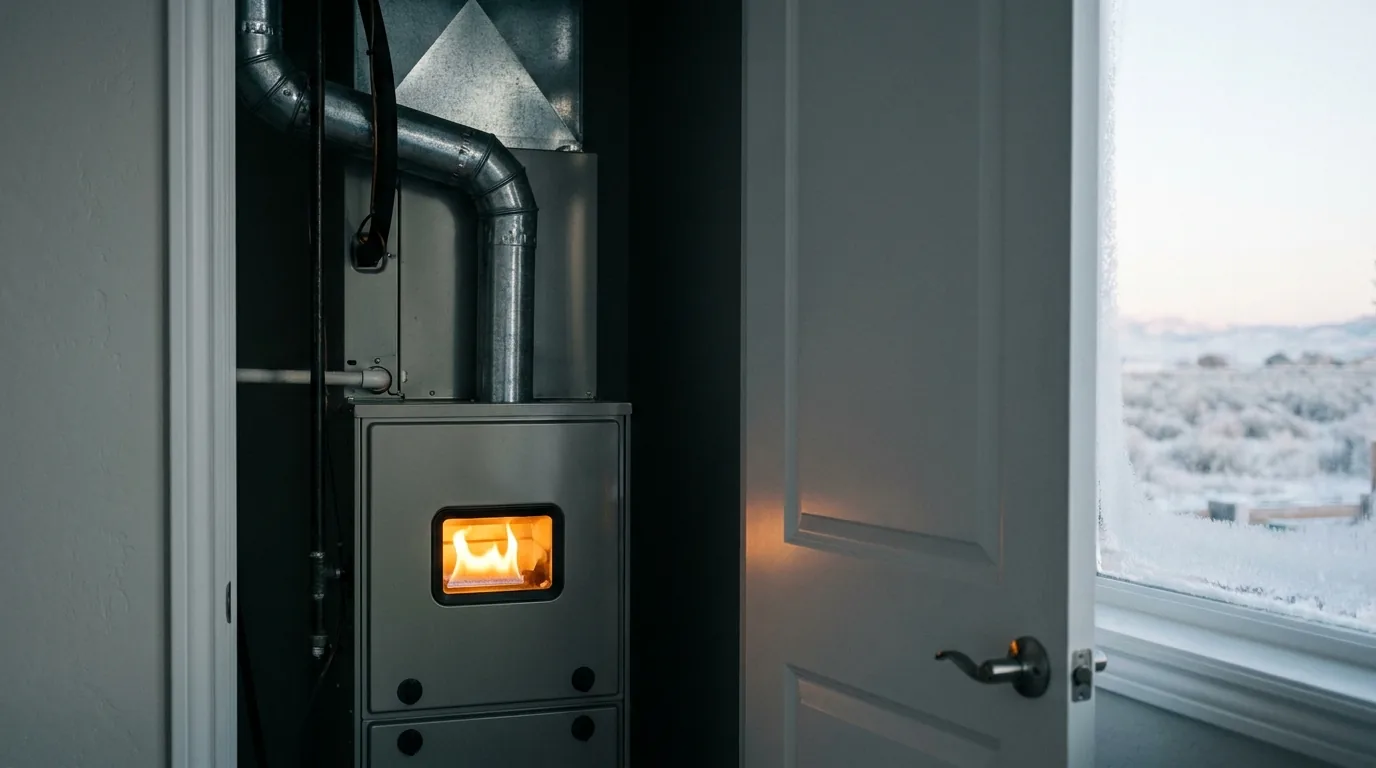
The heat exchanger is the metal chamber inside the furnace where combustion happens. The flame heats the metal, and the blower pushes house air across the outside of the metal to deliver heat to the rooms. The combustion gases (which include carbon monoxide) stay inside the heat exchanger and exit through the flue. When a heat exchanger cracks, combustion gases mix with the house air and CO ends up in the duct system. Heat exchangers crack from thermal cycling over time, from corrosion, and from undersized return-air systems that cause the heat exchanger to overheat. A crack is not visible from outside the unit. We inspect with an inspection camera and a combustion analyzer that measures CO in the supply air during operation. Visible signs that warrant immediate inspection include rust streaks at the burner area, soot deposits inside the burner compartment, and a flame that flickers or pulls toward the blower when the blower kicks on. A confirmed cracked heat exchanger is not repairable. The furnace either gets a new heat exchanger (rare, only on systems under warranty) or the furnace gets replaced. The reason we push fall tune-ups so hard is because heat exchanger failure is the highest-consequence failure mode and it is fully detectable with the right equipment.
Cold-Start Ignitor and Pressure Switch Testing
Modern furnaces use a hot-surface ignitor (a thin silicon nitride or silicon carbide element that glows red when energized) to light the burner. Ignitors are consumable parts that fail on a roughly 5-7 year cycle, and they fail more often on cold-start in November because the ignitor is being asked to work after a long idle period. Symptoms of a failing ignitor include the furnace clicking through its startup sequence (inducer fan starts, then nothing) without the burner lighting. Replacement is straightforward, $150-$250 in parts and labor, and we carry common ignitor types on every truck. The pressure switch is a small safety component that confirms the inducer fan is producing the correct draft before the gas valve opens. A blocked flue, a flue obstruction (bird nest is the most common, especially after summer), or a failing inducer fan all cause the pressure switch to keep the gas valve closed. Both the ignitor and the pressure switch get tested during a fall tune-up under actual operating conditions. Catching a marginal ignitor or a borderline pressure switch in October prevents the 11pm no-heat call when it finally fails on the coldest night.
Weatherstripping and Insulation Check
Even a perfectly tuned furnace will struggle to maintain comfort if the house is leaking heat through poor weatherstripping, attic insulation gaps, or single-pane windows. The big-impact items are the easy ones. Check the weatherstripping at every exterior door for compression and gaps. Replace any seal that is hard, cracked, or missing. Check window seals for daylight visibility, which means caulk has failed. Check attic insulation depth, R-30 minimum (about 10 inches of blown fiberglass) is the modern standard for High Desert climate zone, R-38 is better. Most pre-2000 High Desert homes have R-19 or less and benefit substantially from a top-up. Seal known air leak points, especially can lights in the ceiling (use IC-rated airtight covers) and the chase where plumbing or HVAC penetrates the ceiling plane. None of this is HVAC work, but it directly affects how hard the furnace has to run and how warm the house actually feels. A tight envelope with R-38 attic insulation can drop heating runtime 20-30 percent on the coldest nights compared to a leaky envelope with R-19, which translates to lower gas bills and longer equipment life.
What to Do If the Furnace Fails on a Cold Night
If the furnace fails during a hard freeze, work through the safe checks first before calling for service. Look at the thermostat, confirm it is set to heat and the temperature setting is above current room temperature. Check the breaker panel for a tripped breaker on the furnace circuit (some furnaces have two breakers, one for the system and one for the blower). Check the filter, a fully clogged filter can trip a high-limit safety. Look at the gas supply, if the range and water heater also are not working, the issue is at the meter or the supplier, not the furnace. For propane homes, check the tank gauge, anything under 20 percent in cold weather is a problem regardless of furnace condition. Once safe checks are done, call us. Same-day dispatch is faster in winter than summer because winter peak demand is shorter and less geographically synchronized. While waiting, set up safe alternative heat. Plug-in electric space heaters work for one or two rooms. Never use a gas oven, charcoal grill, or unvented gas heater to warm a house, all three produce CO. Close off unused rooms to concentrate heat where the family is. If the home gets below 50F overnight, drip cold-water faucets to prevent pipe freeze, especially in homes with exterior-wall plumbing or higher elevations like Phelan and Wrightwood.
Quick checklist
Action items.
- ✓ Schedule fall furnace tune-up in September or October before peak demand
- ✓ Test every CO detector in the house, replace any unit older than 10 years
- ✓ Check propane tank level if applicable, refill before tank drops below 30 percent
- ✓ Verify weatherstripping at all exterior doors and check window caulk for gaps
- ✓ Inspect attic insulation depth, R-30 minimum, top up if you find R-19 or less
- ✓ Replace furnace air filter and inspect every 60-90 days through heating season
- ✓ Locate and clear any flue blockages (bird nests common after summer)
- ✓ Confirm gas shutoff valve location for emergencies
- ✓ Identify a backup heat plan (electric space heaters, designated warm rooms)
- ✓ Save 760-983-2326 in your phone for fast no-heat dispatch
When to call us
Don't wait too long.
Call JC Energy Solutions at 760-983-2326 to schedule a fall furnace tune-up before the first cold front hits. Our Hesperia office on Main Street dispatches across Hesperia, Apple Valley, Victorville, Adelanto, Phelan, Pinon Hills, Wrightwood, Oak Hills, and Lucerne Valley. September and October scheduling is open with reasonable availability. November and December run heavier same-day calls and tune-up appointments push out two to three weeks. Any sign of a cracked heat exchanger, repeated ignition failures, a CO detector alarm, or a flame that pulls toward the blower warrants an immediate service call regardless of season. Service Agreement at $15 per month or $180 per year includes the annual heating tune-up plus priority dispatch during peak cold weeks, which during a multi-day cold snap means the difference between a same-day fix and a wait.
Financing available · GreenSky + Wisetack
See financing options →200+
Five-star reviews
A+ Accredited 2020
ACCA · EPA 608
Certified technicians

Preferred Vendor
7+ yrs
Family-owned
24/7
$0 diagnostic w/ repair
Factory-authorized dealer:


Frequently Asked Questions
How cold does it actually get in the High Desert?
When should I schedule my furnace tune-up?
Why do CO incidents spike in early November?
What is special about propane in cold weather?
Is a cracked heat exchanger repairable?
What should I do if the furnace fails on a cold night?
How do I know if my CO detector is still working?
Sources + references
Authority sources cited.
- →SoCalGas safety information
- →CDC: Carbon monoxide poisoning prevention
- →ENERGY STAR: Furnaces
- →CPSC: Carbon monoxide information
External links open in a new tab. JCE has no commercial relationship with these organizations unless explicitly noted.