Skip to content
JC Energy Solutions - Heating & Cooling
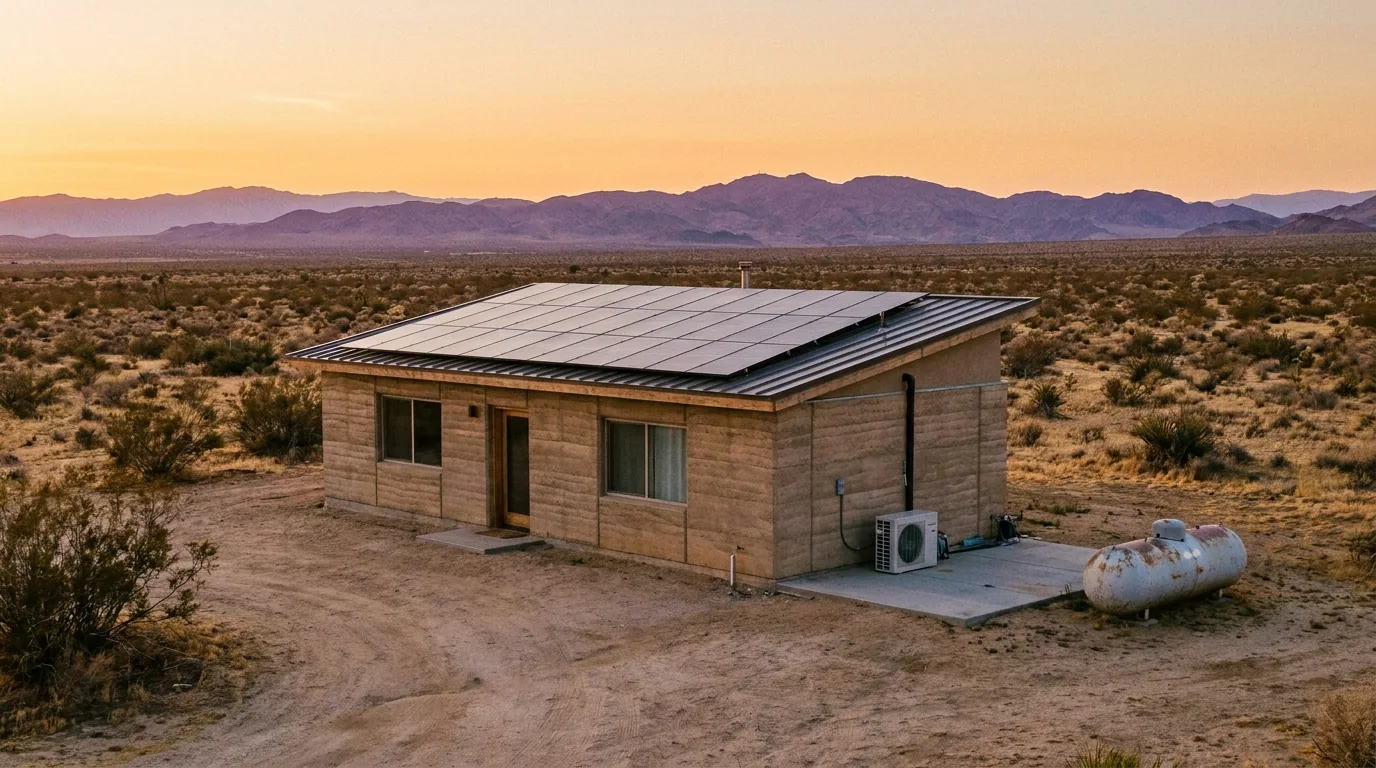
Off-grid heat pump install in the High Desert: solar-paired equipment on a Lucerne Valley property

Off-grid and solar-paired HVAC installs

Off-grid HVAC across Lucerne Valley, Phelan, Wrightwood. Heat pump sizing matched to solar production, variable-speed inverter equipment, battery startup current, generator and propane backup integration.

200+ Reviews

5.0 on Google

BBB Accredited Business - A+

Accredited

BBB A+ Rating

CSLB Licensed

#998538

Quick answer

JC Energy Solutions handles off-grid and solar-paired HVAC across Lucerne Valley, Phelan, and Wrightwood. We size heat pumps to match solar production capacity, specify variable-speed inverter equipment for gradual ramp-up that battery banks can handle, and integrate generator and propane backup for cold-snap heating. Off-grid integration is more involved than standard residential, and pricing reflects the extra design work.

Lucerne Valley has the highest off-grid concentration in the High Desert. Phelan adds a smaller but real cluster, and Wrightwood elevation has the occasional off-grid property. The HVAC challenge on these jobs is matching equipment to a power source that has hard limits: solar array capacity, battery bank size, and inverter continuous output. Standard residential HVAC equipment is sized assuming unlimited grid power. Off-grid sizing has to start from the production side and work backward to what the system can run reliably. JCE designs heat pump systems sized to actual solar production, specifies variable-speed inverter compressors that ramp up gradually instead of pulling startup current spikes, and integrates generator and propane backup for cold-snap heating loads that exceed solar production capacity.

Why this matters in the High Desert

Off-Grid and Solar-Paired HVAC in Lucerne Valley and Phelan.

Off-grid properties cluster in three HD areas. Lucerne Valley is the largest concentration, with multi-acre lots scattered across the open desert north and east of the town center. Phelan has a smaller cluster on the higher desert north of Highway 138. Wrightwood at elevation has occasional off-grid cabins and homes, mostly in the more remote drainage areas off the main road.

The core design challenge is power source matching. A grid-tied home runs whatever HVAC equipment fits the load calculation, because the grid carries the demand. Off-grid systems have a hard ceiling: solar array peak production, battery bank usable capacity, and inverter continuous output rating. A 6kW solar array with a 20kWh battery and a 6kW inverter cannot run a 5-ton single-stage AC condenser, even if the load calc says 5 tons. The startup current spike alone would trip the inverter, and continuous run would drain the battery in a few hours of cloudy weather.

Variable-speed inverter compressors are the right answer for off-grid HVAC. Single-stage equipment (the standard residential default) ramps from zero to full load instantly, drawing 4 to 6 times the running current at startup. That spike is what fries inverter-tied off-grid systems. Variable-speed inverter compressors ramp up gradually from low to high demand over 30 to 90 seconds, which battery banks and solar inverters can handle without tripping. They also run at part-load most of the time, which keeps continuous draw inside the inverter rating. We default to variable-speed equipment on every off-grid install.

Mini-splits are often the better fit than central systems on off-grid properties because they ship with inverter compressors as standard, the load is more controllable per zone, and a single-zone failure does not take down the whole property. A typical Lucerne Valley off-grid install pattern: 12k to 18k BTU heat pump mini-split in the main living area, 9k or 12k BTU in the master bedroom, optional third zone in a workshop or guest space.

Generator and propane backup integration is the second design layer. Solar-only HVAC runs into trouble during winter cold snaps (December and January in the HD valley, deeper at Wrightwood elevation) when heat pump load is high and solar production is low. We design dual-fuel systems where the heat pump handles normal load and a propane wall heater or vented furnace covers the cold-snap shoulder load. Generator backup (propane or diesel) keeps the heat pump running through extended cloudy stretches.

These are not standard residential installs. Design time is longer, equipment costs more, and the integration with the off-grid power system requires coordination with the solar installer. Pricing reflects the extra work. From our Hesperia office on Main Street, travel to Lucerne Valley runs 60 to 70 minutes. Phelan is 35 to 45 minutes. Wrightwood is 60 to 75 minutes depending on the specific address.

Key considerations

What we plan for.

AC and heat pump load matched to solar production

Off-grid sizing starts from the production side: peak array kW, battery bank usable kWh, inverter continuous rating. Equipment is sized to fit inside those limits, not to match the building load alone. We coordinate with the solar installer to confirm production and inverter specs before quoting.

Battery sizing for startup current spikes

Single-stage HVAC compressors draw 4 to 6 times running current at startup. That spike trips most inverter-tied off-grid systems. We default to variable-speed inverter equipment that ramps gradually. When single-stage is unavoidable, we coordinate soft-start kits with the solar installer to keep the spike inside inverter limits.

Variable-speed inverter compressors as default

Variable-speed equipment ramps from low to high demand over 30 to 90 seconds, which battery banks and solar inverters can handle. They also run at part-load most of the time, which keeps continuous draw inside the inverter rating. We do not install single-stage equipment on off-grid jobs unless the homeowner has a specific reason.

Generator backup integration

Solar-only HVAC fails during extended cloudy stretches. Generator backup (propane or diesel) keeps the heat pump running until production recovers. We coordinate the HVAC side of the integration: dedicated transfer switch wiring, generator-friendly soft-start where needed, control logic for automatic switchover.

Propane backup heating for cold snaps

HD valley winter overnight lows hit 25 degrees, with December and January cold snaps that push heat pump output close to capacity. Wrightwood elevation gets into the high teens or lower. A propane wall heater or vented furnace covers the cold-snap shoulder load when heat pump alone cannot keep up. Dual-fuel design is the most reliable approach for off-grid winter.

Coordination with solar installer

Off-grid HVAC design depends on solar production, battery, and inverter specs. We coordinate with the solar installer (the homeowner's existing installer or one we partner with) before quoting equipment. Trying to design HVAC in isolation from the power system is the most common way these projects go sideways.

What we do

Scope of work.

  • Heat pump sizing matched to solar array peak production
  • Variable-speed inverter mini-split installs (single-zone, dual-zone, three-zone)
  • Generator backup transfer switch and HVAC integration
  • Propane wall heater and vented furnace install for dual-fuel cold-snap backup
  • Coordination with solar installer on inverter capacity and battery sizing
  • Soft-start kit retrofits when single-stage equipment is in place
  • Annual maintenance covering off-grid equipment specifics
  • Conversion from older single-stage off-grid equipment to variable-speed

Cities we focus on

Where this work lives.

What homeowners say

5 stars, every job.

5.0

Verified reviews from High Desert homeowners. Swamp coolers, mini-splits, furnaces, AC - same standard, every job.

Google · Verified

Great customer service! Friendly and respectful of property. Thank you to all the JC Energy team for getting the job done professionally.

Israel Regus

May 27, 2025

Google · Verified

Was very kind,very helpful. Highly recommend

Beautiful Dreamer

Apr 30, 2025

Google · Verified

Cody did a great job as always

Robert Johnson

Apr 21, 2025

Google · Verified

Excellent service. Cody was very professional and explained everything clearly. He was on time, JC Energy actually text me a picture of him and his name when he was on his way. Great service. I would highly recommend JC Energy Solutions.

Clara Schexnyder

Apr 14, 2025

Financing available · GreenSky + Wisetack

See financing options →

200+

Five-star reviews

BBB Accredited Business

A+ Accredited 2020

ACCA · EPA 608

Certified · Ice Energy

7+ yrs

Family-owned

24 / 7

Emergency dispatch

$0

Diagnostic w/ repair

Frequently Asked Questions

Can my solar system run a heat pump?
Usually yes, with the right equipment selection. A 6 to 10 kW solar array with a 15 to 30 kWh battery bank can run a properly sized variable-speed mini-split heat pump system through normal load. Cold-snap winter and extended cloudy stretches need backup (generator or propane). We coordinate with your solar installer on production and inverter specs before quoting equipment.
Why variable-speed instead of single-stage on off-grid?
Single-stage compressors draw 4 to 6 times running current at startup. That spike trips most inverter-tied off-grid systems and flat-out fries some. Variable-speed inverter compressors ramp up gradually over 30 to 90 seconds, which battery banks and solar inverters can handle. They also run at part-load most of the time, which keeps continuous draw inside the inverter rating.
How much does off-grid HVAC cost?
Off-grid integration is more involved than standard residential. A typical solar-paired heat pump mini-split install (single zone or dual zone with backup integration) runs $5,500 to $11,000. Multi-zone systems with full generator and propane backup integration run $9,000 to $17,000. The premium over grid-tied work covers the extra design time, variable-speed equipment, and backup integration.
Do you do off-grid work in Lucerne Valley?
Yes. Lucerne Valley has the highest off-grid concentration in the HD, and we run regular calls there. Travel from our Hesperia office on Main Street is about 60 to 70 minutes. Phelan runs 35 to 45 minutes. Wrightwood elevation properties run 60 to 75 minutes depending on specific address.
Can you integrate with my existing generator?
Yes. We coordinate the HVAC side of generator integration: dedicated transfer switch wiring, soft-start kits where needed, control logic for automatic switchover. Whether the generator is propane (most common in HD off-grid) or diesel, the HVAC integration follows the same pattern. We work with the homeowner's existing electrician or generator installer when needed.
What about cold-snap heating when solar production is low?
HD valley winter overnight lows of 25 degrees and Wrightwood elevation lows into the high teens or lower can push a heat pump close to capacity exactly when solar production is at its lowest (short days, often cloudy). Dual-fuel design is the most reliable approach: heat pump handles normal load, propane wall heater or vented furnace covers cold-snap shoulder load. We design for both.
Do federal tax credits apply to off-grid heat pump installs?
Federal IRA 25C and 25D credits expired December 31, 2025. They do not apply to new installs in 2026. SCE rebates do not apply to off-grid systems (no grid connection means no utility rebate path). Pricing on off-grid work reflects the actual install cost without rebate offsets.

Sources + references

Authority sources cited.

External links open in a new tab. JCE has no commercial relationship with these organizations unless explicitly noted.

Ready to talk about your project?

Free site visit.
written quote.

Call Text Book