
If you smell rotten eggs or sulfur near your furnace right now, stop reading and follow this sequence.
If you smell gas right now: 4 steps in order
- Get everyone out of the home. Including pets. Don’t pause to gather things. Walk out.
- Don’t touch any electrical switches. Light switches, garage door openers, phones, anything that could spark. Don’t open windows or doors more than you need to walk out.
- From outside or a neighbor’s home, call:
- Southwest Gas: 877-860-6020 (24/7) for natural gas in Hesperia, Victorville, Apple Valley, Adelanto, Lucerne Valley, and Helendale
- SoCalGas: 1-800-427-2200 (24/7) for natural gas in the Inland Empire and SoCalGas areas of Phelan and Wrightwood
- Your propane supplier’s emergency line for propane homes (it is printed on your tank or delivery invoice)
- 911 if anyone is showing CO symptoms (headache, nausea, drowsiness)
- Wait outside until the gas company says it’s safe. Don’t go back in to check the stove or grab keys.
After the gas company confirms the leak is resolved, call us at 760-983-2326 to fix the underlying furnace problem if the leak was at the furnace. Don’t try to fix gas appliances yourself.
Print this section and put it on the fridge
Two-sentence summary: smell rotten eggs = leave the house first, call from outside, don’t touch any switches. CO is invisible and odorless; you need detectors on every floor.
What causes furnace gas leaks
Most furnace gas leaks fall into 6 categories:
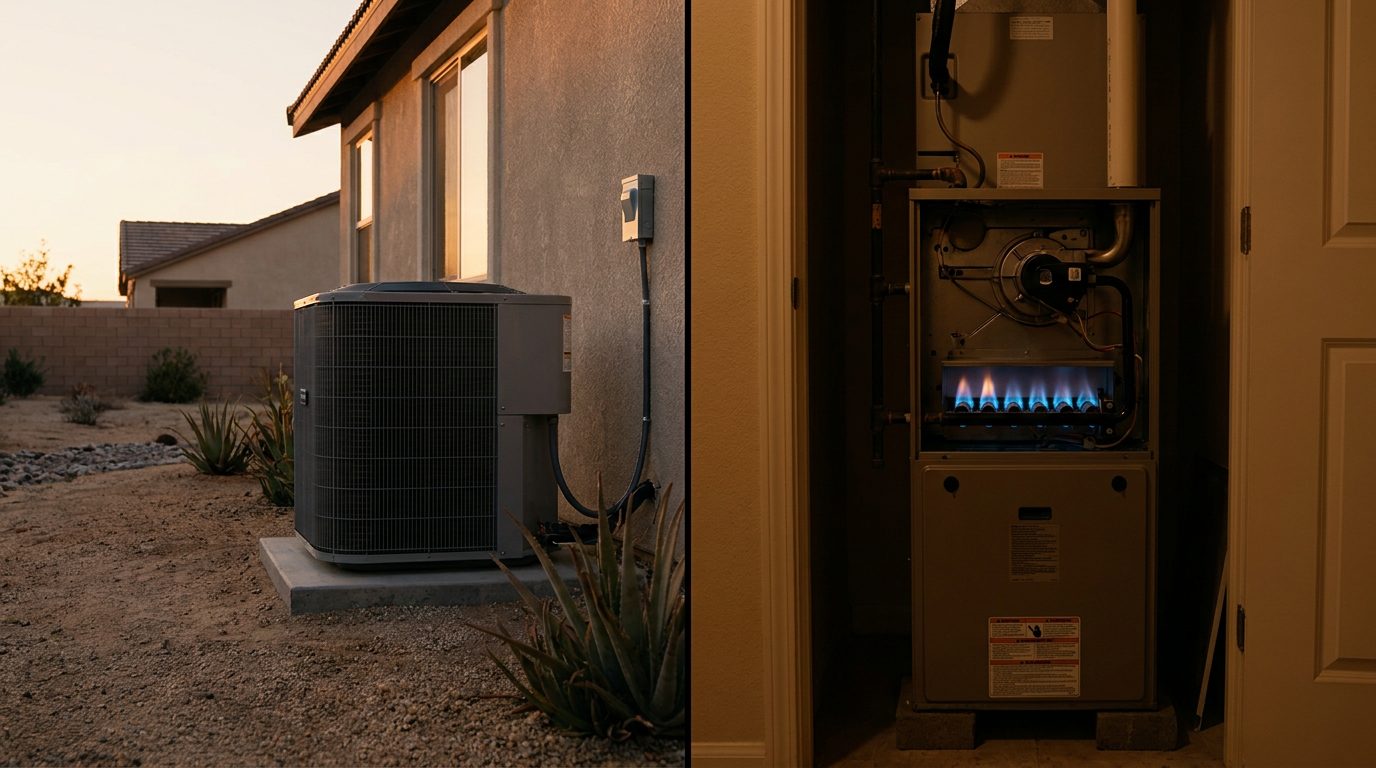
1. Cracked heat exchanger. Microscopic cracks in the metal heat exchanger let combustion gases (including CO) escape into the air the blower distributes through the house. You don’t smell anything because the gases are mostly CO + water vapor. Annual combustion analysis catches this before it becomes dangerous.
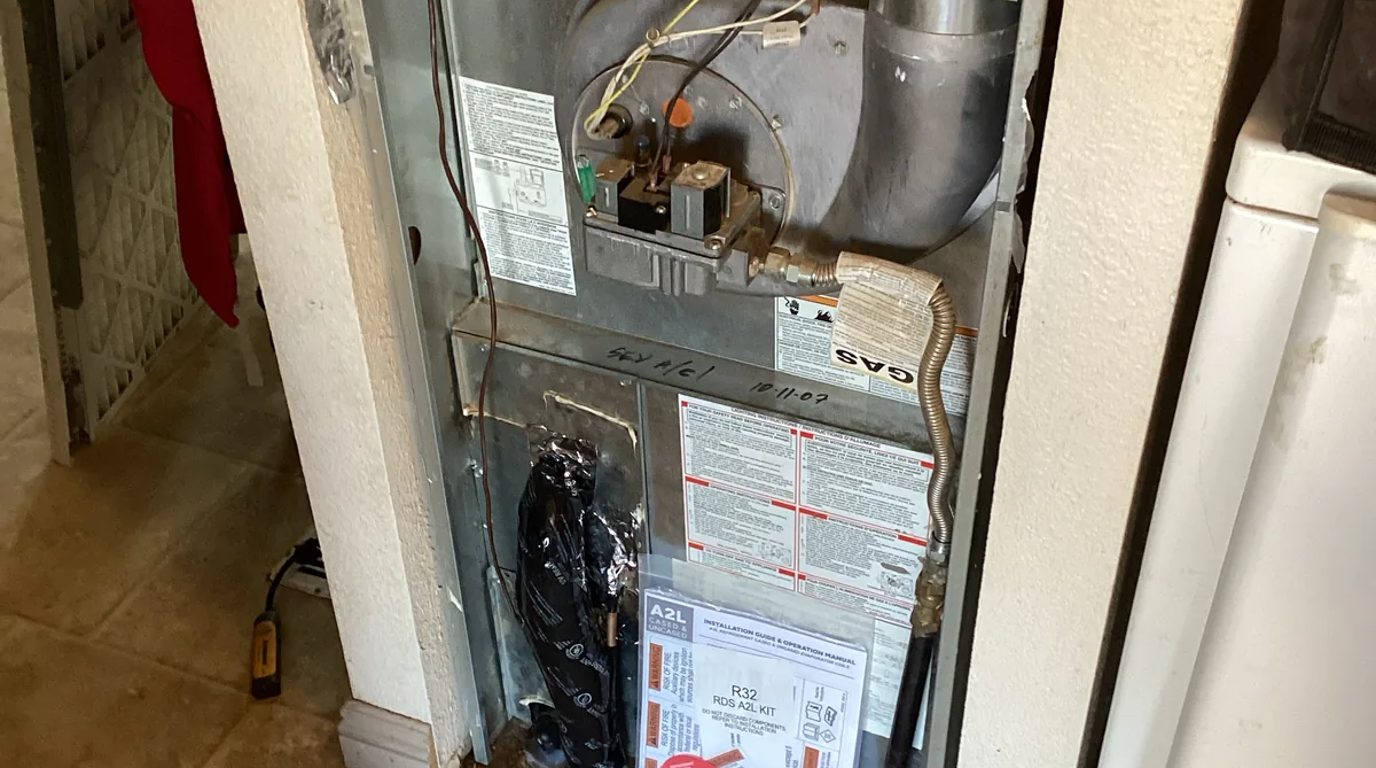
2. Failed gas valve. The gas valve regulates fuel flow to the burner. When it sticks open or develops an internal leak, raw gas can escape into the burner cabinet or vent stack. You’ll smell mercaptan.
3. Loose gas supply line. The flexible or rigid gas line connecting the wall stub-out to the furnace can loosen at fittings over time, especially after a furnace move during a re-do or remodel. Earthquake activity in SoCal also stresses these joints.
4. Cracked or disconnected flue. The flue (exhaust pipe leaving the furnace) can corrode, separate at joints, or get crushed by attic clutter. When the flue doesn’t fully vent outside, exhaust backs into the home, bringing CO and unburned gas.
5. Blocked vent termination. Bird nests, debris, snow buildup (rare in HD but happens in Wrightwood). When the flue exit is blocked, the same backflow problem as #4 occurs.
6. Improperly installed or aged propane regulator. Propane systems have a pressure regulator at the tank and sometimes a second-stage regulator before the appliance. When these fail, gas pressure can run high (overfiring + safety lockout) or develop a small leak.
Annual inspection catches all six before they become emergencies.
CO detection, non-negotiable
Furnace gas leaks of unburned gas are detectable by smell. CO from incomplete combustion is not. Every gas-heated home needs working CO detectors.
Rules:
- One CO detector on every floor minimum
- Within 10 feet of every bedroom
- Combine CO + smoke detectors are fine
- Replace batteries annually (test at daylight-saving time changes)
- Replace the detector unit itself every 7-10 years (the sensor wears out even if the battery’s fine)
Brands we recommend: First Alert SCO5CN, Kidde Worry-Free, Nest Protect. Avoid anything under $25 at the big-box store, the sensors are unreliable.
Symptoms of CO exposure
Long-term low-level CO exposure (not enough to kill but enough to harm):
- Headaches that improve when you leave the house
- Nausea or dizziness, especially in the morning
- Fatigue / drowsiness during winter
- Symptoms in multiple family members at once
- Pets acting sick
If any of these match, ventilate the home (open windows for 15-30 minutes), get a CO detector if you don’t have one, and call us to inspect the furnace and combustion path.
Acute high-level CO exposure:
- Confusion
- Loss of coordination
- Loss of consciousness
- Death
Acute exposure requires immediate evacuation + 911.
Why annual inspection actually matters
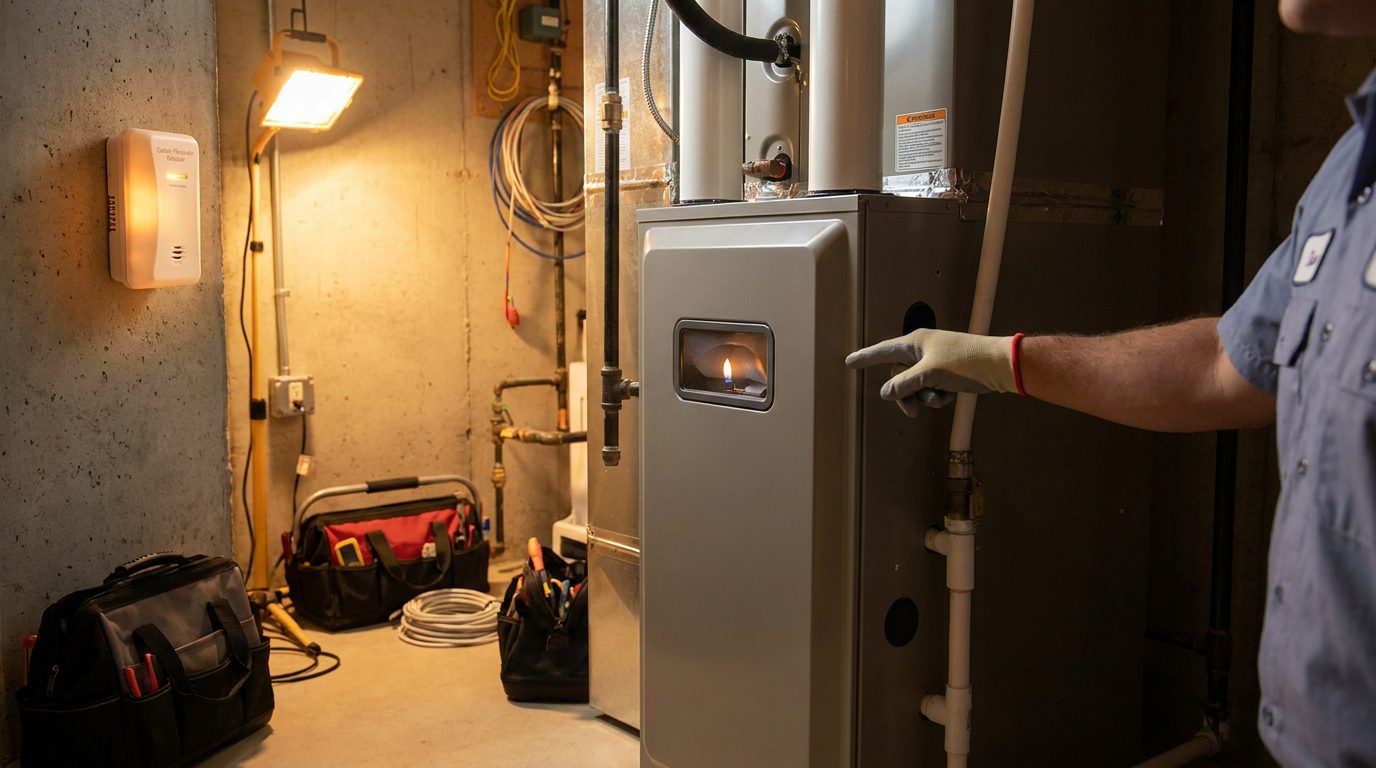
A typical annual furnace tune-up includes:
- Visual inspection of the heat exchanger (looking for cracks, rust, separation)
- Combustion analysis with a CO meter and O2 sensor
- Flue draft test (confirms exhaust is moving the right direction)
- Gas valve safety check
- Burner inspection (clean burners burn complete and clean; dirty burners can produce CO)
- Ignition system test
Cost: $129 for a single furnace. The math:
| Scenario | Cost |
|---|---|
| Annual inspection | $129/yr |
| Cracked heat exchanger caught early → replace heat exchanger ($800-$1,400) | One-time cost, system continues |
| Cracked heat exchanger NOT caught → CO poisoning, hospital, replacement | Catastrophic |
Most manufacturers also require annual professional maintenance to honor warranty claims. Documentation matters.
High Desert propane specifics
Wrightwood, parts of Phelan, and high-elevation Lucerne Valley are propane country. Specifics that matter:
- Propane is heavier than air. Leaks pool in basements, crawl spaces, low closets. CO detectors should be on every floor but propane gas detectors should be near the floor.
- Annual propane appliance inspection is recommended by propane suppliers. Includes furnace, water heater, fireplace, and any unvented heaters.
- Propane regulator service life is 15-20 years. Old regulators are a common leak source.
- Snow events can block vents. Wrightwood gets occasional snow that can drift over furnace exhaust. Walk around after every storm.
When to call
For active gas smell or CO symptoms: leave the home, call your gas utility or propane supplier, then 911 if anyone is symptomatic. Call us at 760-983-2326 after the immediate situation is handled.
For annual furnace inspection: schedule in October or November before peak heating season. Same $129 covers both spring AC tune-up and fall furnace tune-up if you’re on our maintenance plan.
See our furnace service page, maintenance services, or 24/7 emergency dispatch if you need same-day help.