
Short cycling is one of the most common HVAC complaints we get and one of the most common things HD contractors get wrong. The system runs for a few minutes, shuts off, kicks back on five minutes later, and repeats hundreds of times a day. The house doesn’t cool evenly, the compressor wears out fast, and the bill goes up.
Two-sentence answer: in HD homes, the #1 cause of short cycling is an oversized AC. The other five causes, dirty filter, thermostat location, low refrigerant, electrical control, frozen coil, are real but rarer in our service area.
Below are the six causes ranked by what we actually see on diagnostics, from AC repair in Hesperia out to Lucerne Valley.
1. Oversized AC (the HD install trap)
The classic setup: A contractor came out, eyeballed the house, said “you need a 5-ton,” and installed one. The house is 1,500-1,800 sq ft. A real Manual J would have said 3 tons.
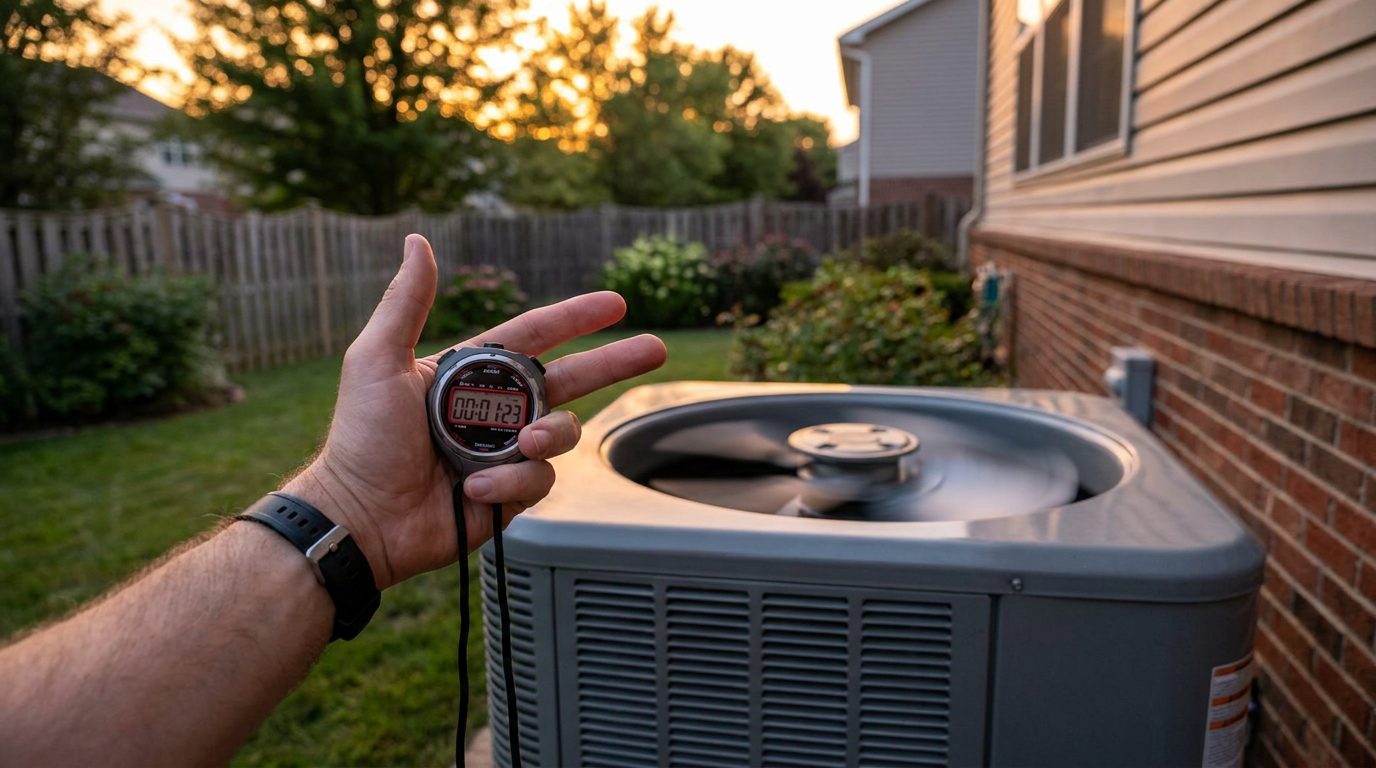
Why it short cycles: The oversized AC cools the air near the thermostat so fast that the thermostat satisfies in 4-8 minutes. The compressor shuts off. The indoor temperature drifts back up over 12-15 minutes. The compressor kicks on again. Repeat 40+ times a day.
Side effects beyond short cycling:
- Poor dehumidification (cycles never run long enough to pull moisture)
- Hot/cold spots (rooms far from the air handler don’t have time to cool)
- High electric bills (inrush current at startup is wasteful)
- Premature compressor failure (years of start-stop fatigue)
Fix: Replacement with properly-sized equipment. Manual J load calc determines correct size, run our free AC Sizing Calculator for a 30-second estimate, then see our HD sizing guide for the full methodology. There’s no Band-Aid; oversize installs short-cycle until they’re replaced.
Cost: Replacement install $5,800-$16,500 depending on tier and rebates.
2. Thermostat location problem
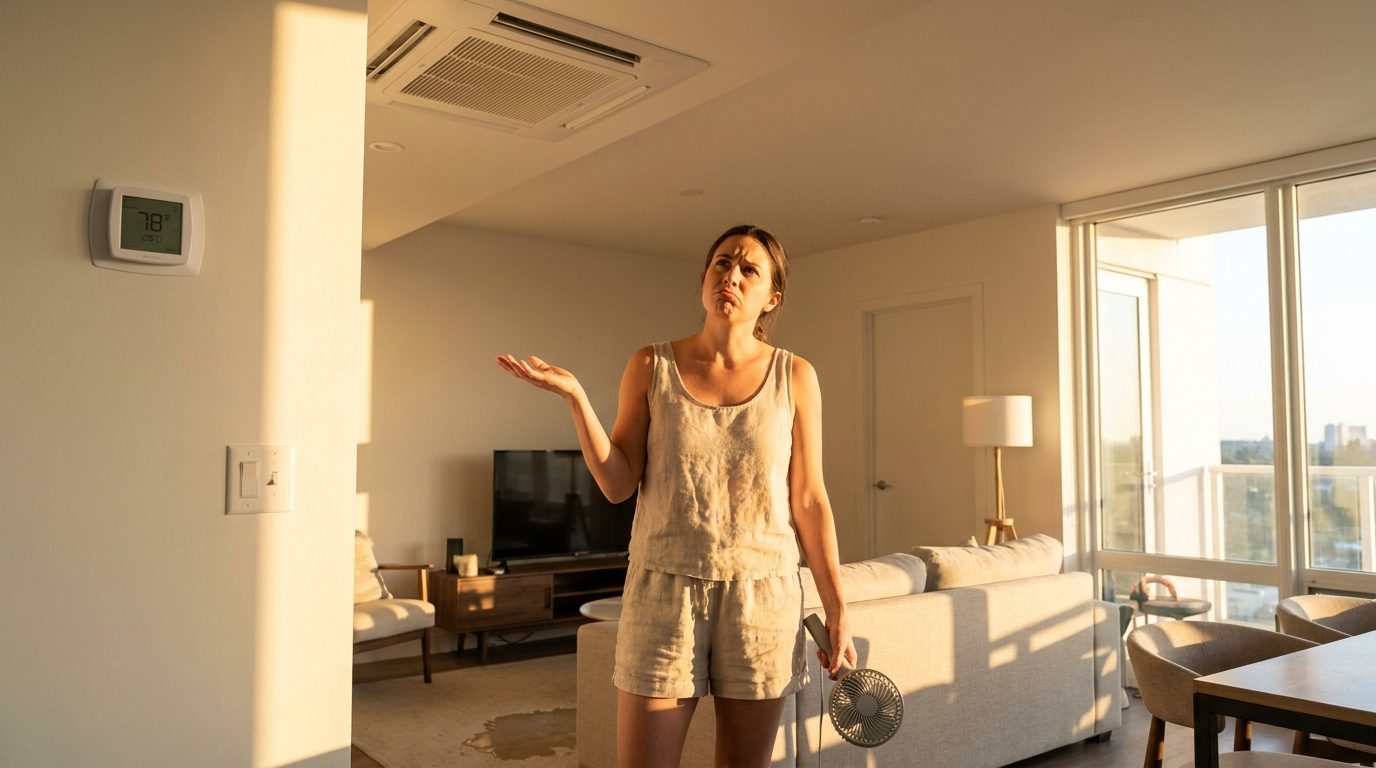
What’s happening: The thermostat is mounted in a spot where it reads warmer or cooler than the rest of the house. Most common: thermostat on a west-facing wall in afternoon sun, reading 84°F while the rest of the house is 76°F. The AC cycles aggressively trying to satisfy the (incorrect) high reading.
Diagnostic clue: The room with the thermostat feels normal but other rooms feel cold or you hear the AC cycling constantly only in the afternoon.
Fix: Relocate the thermostat to an interior wall away from direct sun, vents, and heat-producing appliances. Or upgrade to a smart thermostat with remote sensors that can prioritize a different room.
Cost: Thermostat relocation $185-$385. Smart thermostat with sensors $200-$300 plus install.
3. Dirty or clogged air filter
What’s happening: Filter restricts airflow to the indoor evaporator coil. Coil ices over (less air = colder coil). Iced coil = no heat transfer = AC quickly satisfies thermostat and shuts off. Coil partially thaws during off-cycle. Repeat.
Diagnostic clue: Pull the filter. Hold to light. If you can’t see through it, replace it. Then let the system run with FAN on AUTO for 2-4 hours to thaw any iced coil. Restart.
Fix: New filter. See filter cadence post for HD specifics.
Cost: $0-$25 for filter.
4. Low refrigerant from a leak
What’s happening: Low refrigerant charge means the system can’t move enough heat. The compressor cycles based on safety controls (pressure switches) rather than thermostat satisfaction. Cycles can be erratic, sometimes long, sometimes very short.
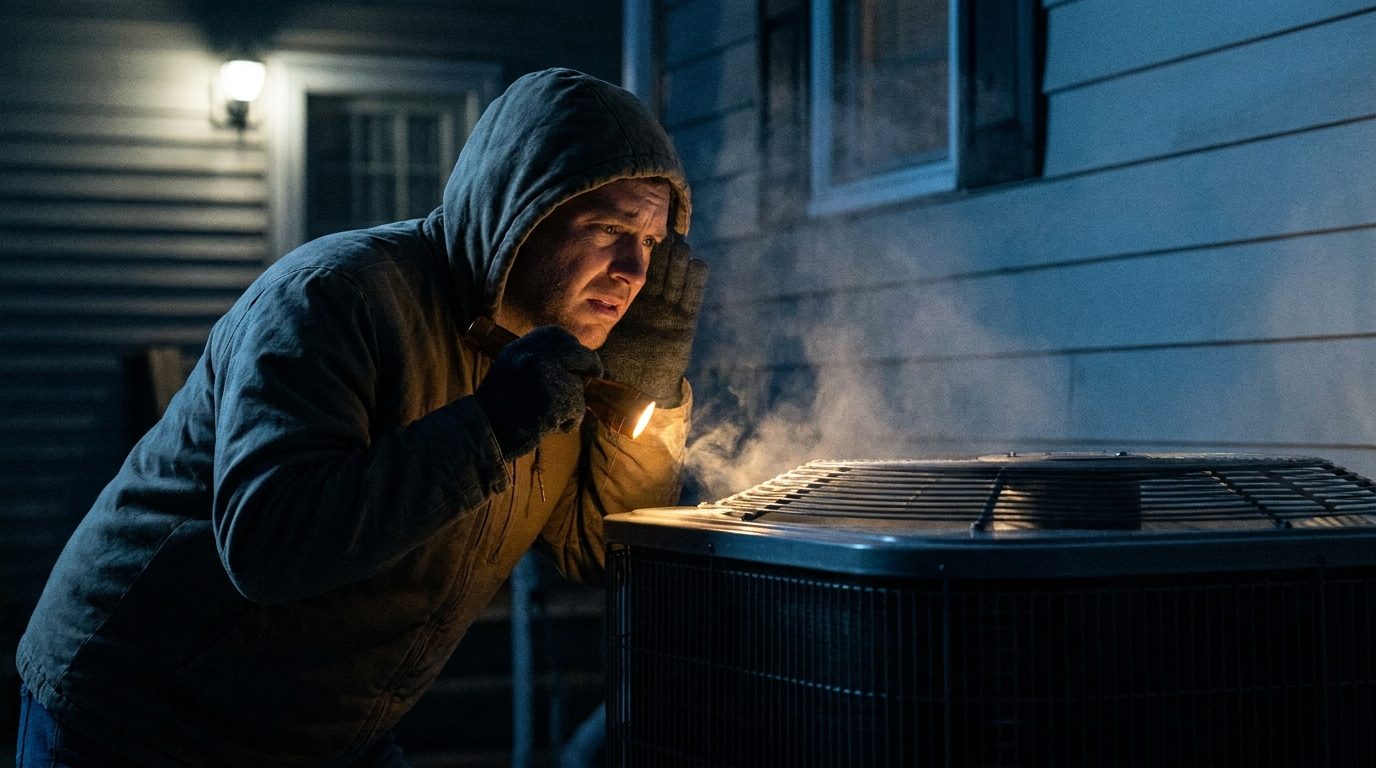
Diagnostic clue: Outdoor large copper line is frosty or icy. Indoor air at vents is “barely cool” not properly cold. Hissing at line connections.
Fix: Leak repair + recharge. AC systems don’t lose refrigerant during normal operation; if low, you have a leak.
Cost: $650-$1,400 for leak repair. R-22 systems cost more.
5. Electrical control failure (relay or capacitor)
What’s happening: A failing contactor or run capacitor causes intermittent power to the compressor. The compressor starts, stops abruptly, restarts. Looks like short cycling from the outside.
Diagnostic clue: Buzzing or chattering from the outdoor electrical compartment. Erratic cycling pattern (not consistent like the other causes).
Fix: Capacitor or contactor replacement.
Cost: $185-$325.
6. Frozen evaporator coil (downstream of #3 or #4)
What’s happening: The indoor coil is iced over (usually from dirty filter or low refrigerant). The system runs briefly until safety controls trip, shuts down, partially thaws, restarts.
Diagnostic clue: Water dripping from indoor unit. Ice on suction line outside. Air at vents barely cool.
Fix: Turn AC OFF, fan AUTO. Wait 2-4 hours for ice to melt. Replace filter. Restart. If it ices again, refrigerant is the issue.
Cost: $0 if filter; $650-$1,400 if refrigerant leak.
Diagnostic flow chart
AC short cycling?

→ Run more than 10 min per cycle? → Probably not short cycling. Look at thermostat setpoint.

→ Less than 10 min per cycle?
   → Filter clogged? → Replace filter. Run FAN only 2-4 hr. Restart.
       → Fixed? Done.
       → Not fixed? → Next check.
   → Thermostat in afternoon sun? → Relocate or add remote sensor.
   → Ice on outdoor refrigerant line? → Low refrigerant. Call.
   → Buzzing from outdoor electrical? → Failing capacitor/contactor. Call.
   → System runs ~5-8 min then satisfies thermostat? → OVERSIZED. Replacement needed.
How to know if your AC is oversized
| Sign | Confidence it’s oversize |
|---|---|
| Cycles run 5-8 min and the house feels cool right away | High |
| Thermostat satisfies in under 10 min even on 95°F day | High |
| Room-to-room temp difference > 4°F | Medium |
| Indoor air feels muggy even with AC running | Medium |
| AC is 4+ tons on a home under 1,800 sq ft | High |
If 3+ of these match, your AC was oversized at install.
When to call
Call 760-983-2326 for diagnosis. The first 5 causes are usually quick fixes; oversizing requires replacement planning.
See our AC repair page, AC installation for properly-sized replacement, or What Size AC Do You Need? for the Manual J details.