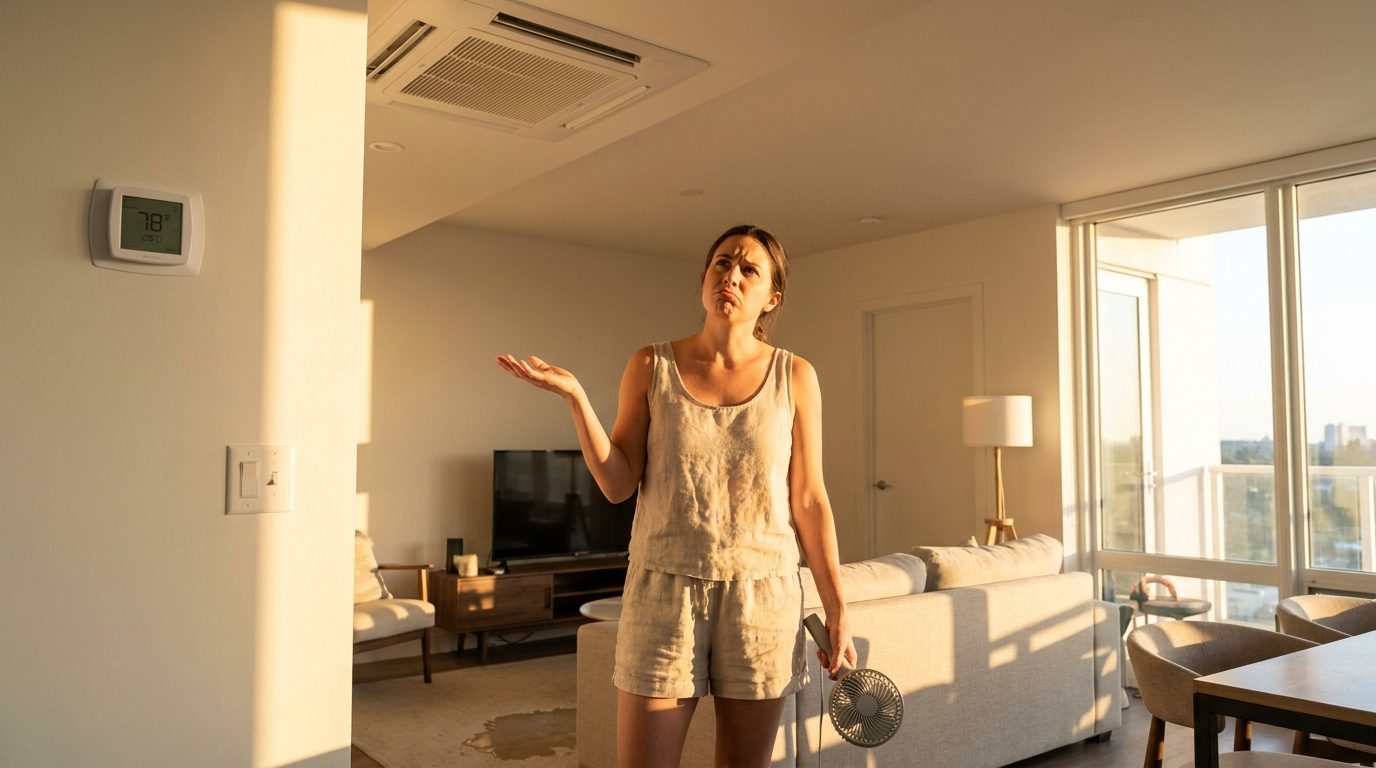
Cold air from the vents when the heat is on is one of the most common winter calls we get. The good news is that it means the furnace has power and the blower works. The problem is somewhere between the thermostat and the burners.
Two-sentence answer: check the thermostat fan setting and the filter first, because those two cause a big share of cold-air calls and cost nothing to fix. If the burners are not lighting or keep shutting off, it is usually the igniter, the flame sensor, or the gas supply, and those need a technician.
1. Thermostat fan set to ON
Symptom: Air blows all the time, warm when the furnace is heating and cool between cycles.
What’s happening: With the fan set to ON, the blower runs continuously, even when the burners are off. That circulating air feels cold, especially in ducts that run through a cold attic.
Fix: Set the fan to AUTO. Free.
2. The first minute of a heat cycle
Symptom: Cool air for the first 30 to 90 seconds, then warm.
What’s happening: Air sitting in the ductwork cools off between cycles. In High Desert homes with attic ductwork, that air can be close to the attic temperature on a cold morning. This is normal.
Fix: None needed. If the air never warms up after about 3 minutes, keep going down the list.
3. Clogged filter and the high-limit switch
Symptom: Warm air for a few minutes, then cold air while the blower keeps running, then warm again. The furnace may lock out after several rounds.
What’s happening: A clogged filter chokes airflow across the heat exchanger. It overheats, and the high-limit switch shuts off the burners. The blower keeps running to cool the heat exchanger down, so you feel cold air. Mojave dust loads filters fast, and a filter that went in during spring can be packed by the first cold week.
Fix: Replace the filter. If the pattern continues with a clean filter, a technician should check for blocked returns, closed registers, or a failing blower.
4. Burners not lighting: igniter
Symptom: The blower runs, but you never see or hear the burners light.
What’s happening: On most furnaces built after 2000, a hot-surface igniter glows to light the gas. When it cracks or burns out, there is no flame. Some control boards will still run the blower after a failed ignition attempt.
Fix: Replace the igniter. $185-$320 installed.
5. Burners light then shut off: flame sensor
Symptom: The burners light, then go out within a few seconds, and the blower keeps pushing cool air.
What’s happening: The flame sensor has to confirm the flame or the gas valve closes. An oxidized sensor cannot read the flame, so the furnace shuts the gas off as a safety measure.
Fix: Cleaning or replacement, $185-$285. See why a furnace pilot light keeps going out for the related ignition failures on older furnaces.
6. Gas supply or propane pressure
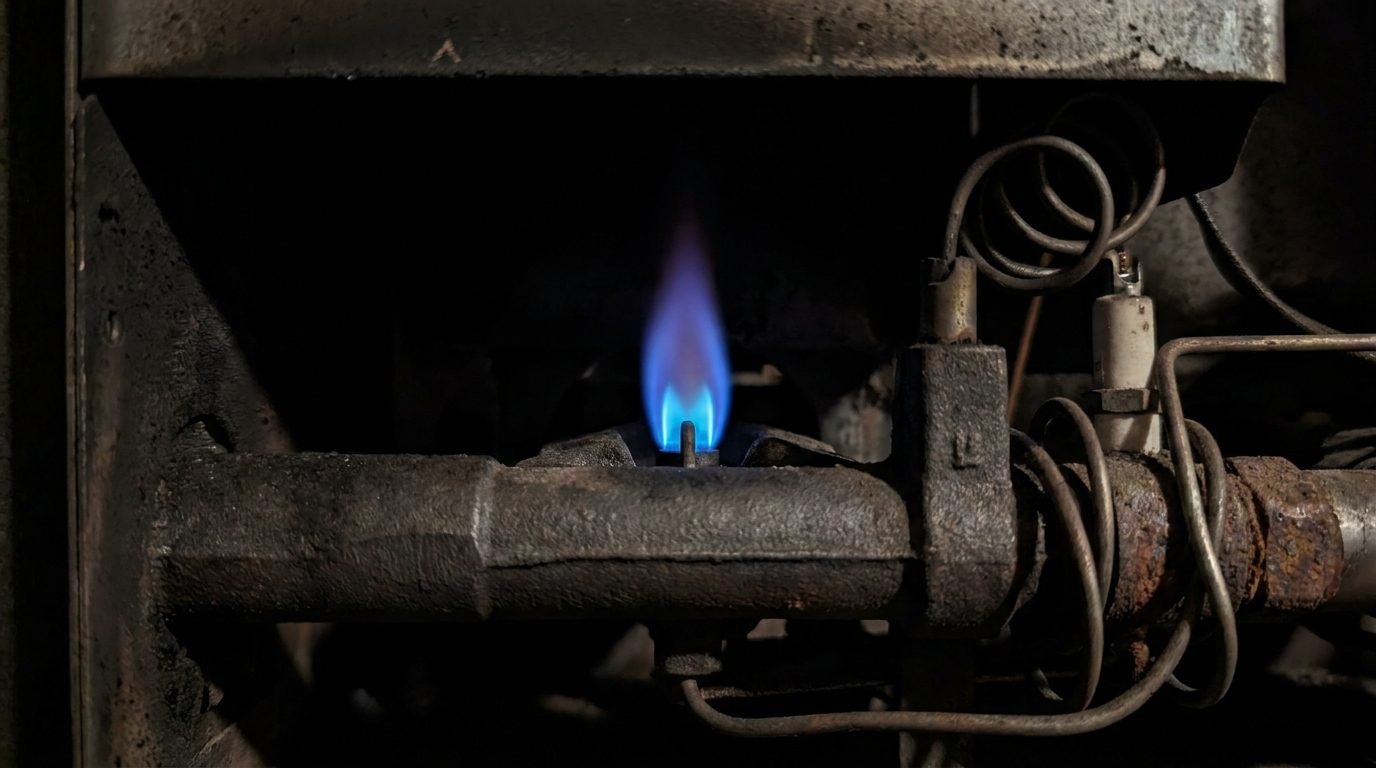
Symptom: Weak, yellow, or lazy burner flames, or burners that will not stay lit. Common on propane homes.
What’s happening: Low gas pressure starves the burners. On propane systems, which are common in Phelan, Wrightwood, and parts of Oak Hills and Lucerne Valley, this is usually a low tank or a failing regulator. On natural gas, check that the gas valve at the furnace is fully open.
Fix: Refill the propane tank if it is low. Regulator replacement $145-$385. If you smell gas, leave the house and call your gas utility or propane supplier from outside.
7. Condensate or venting problem (high-efficiency furnaces)
Symptom: The furnace tries to start, the inducer runs, the burners light briefly or not at all, and the board shows a pressure switch code.
What’s happening: 90%+ efficiency furnaces make water as they burn gas and vent through plastic pipe. A clogged condensate drain, a vent blocked by debris or snow, or a drain line that froze in an unheated attic or garage will keep the furnace from firing. In Wrightwood and the higher parts of Oak Hills, snow drifting over the vent terminations outside is a real cause after storms.
Fix: Clear the vent terminations if you can reach them safely. Otherwise a technician clears the drain and checks the pressure switch. Most of these repairs fall within the $150-$650 range.
Quick reference
| What you notice | Likely cause | Typical cost |
|---|---|---|
| Blower runs all the time | Fan set to ON | Free |
| Cool air for a minute, then warm | Normal startup | Free |
| Warm, then cold, then warm | Clogged filter, high-limit | Cost of a filter |
| Burners never light | Igniter | $185-$320 |
| Burners light, then go out | Flame sensor | $185-$285 |
| Weak yellow flames | Gas pressure or propane regulator | $145-$385 |
| Pressure switch code (90%+ furnace) | Condensate, vent, or inducer | $150-$650 |
When cold air means stop and call
Turn the furnace off and call if you notice any of these:
- A gas smell anywhere near the furnace
- Your carbon monoxide detector goes off
- Soot or scorch marks around the burner area
- A rollout switch keeps tripping
- The furnace is 15+ years old and has never had a combustion test
A furnace that repeatedly overheats can crack its heat exchanger over time, and a cracked heat exchanger can leak carbon monoxide into the supply air. That is why we run a combustion test on every furnace tune-up.
When to call
Call 760-983-2326. Most cold-air calls are one-visit fixes. See furnace repair, furnace repair in Victorville, or our post on a furnace that will not turn on at all.