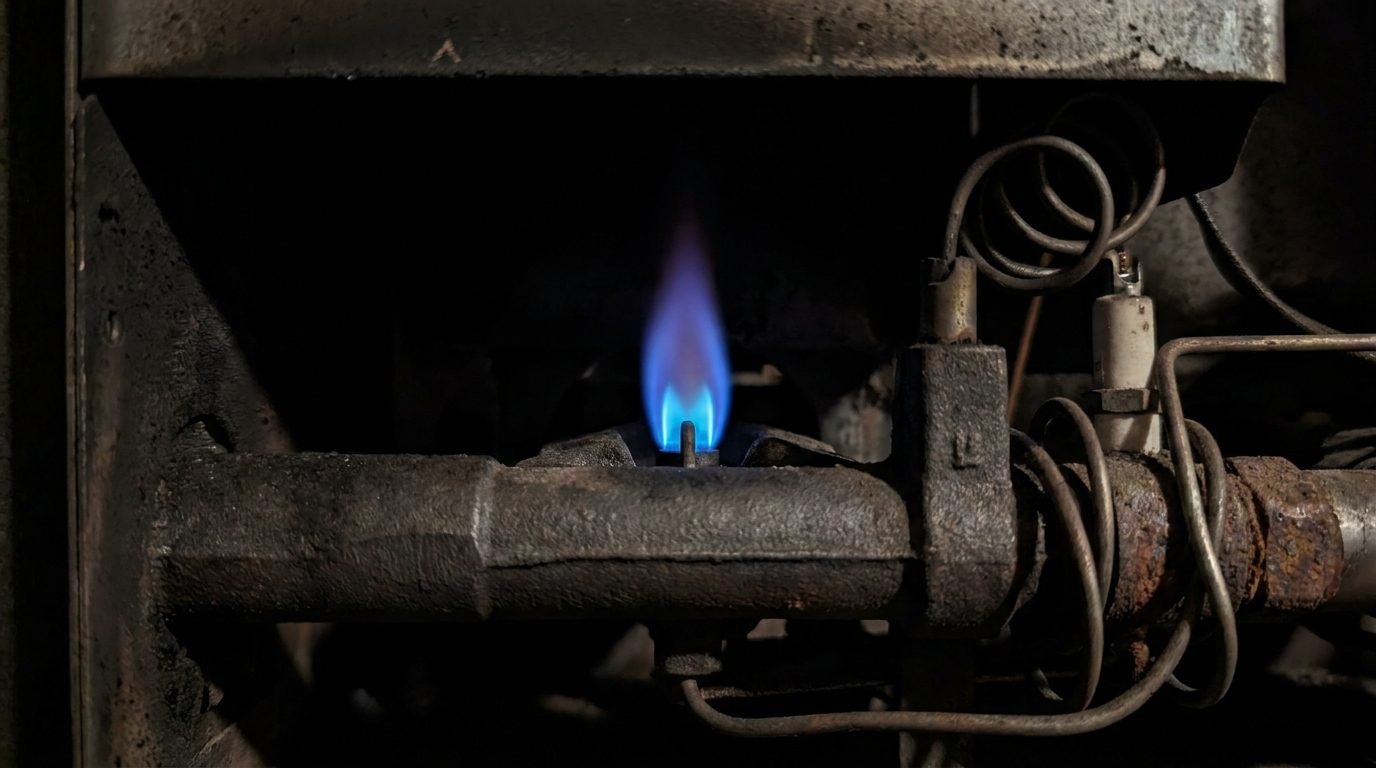

Two different furnace types, two different sets of pilot/ignition problems. First step in diagnosis: know which kind you have.
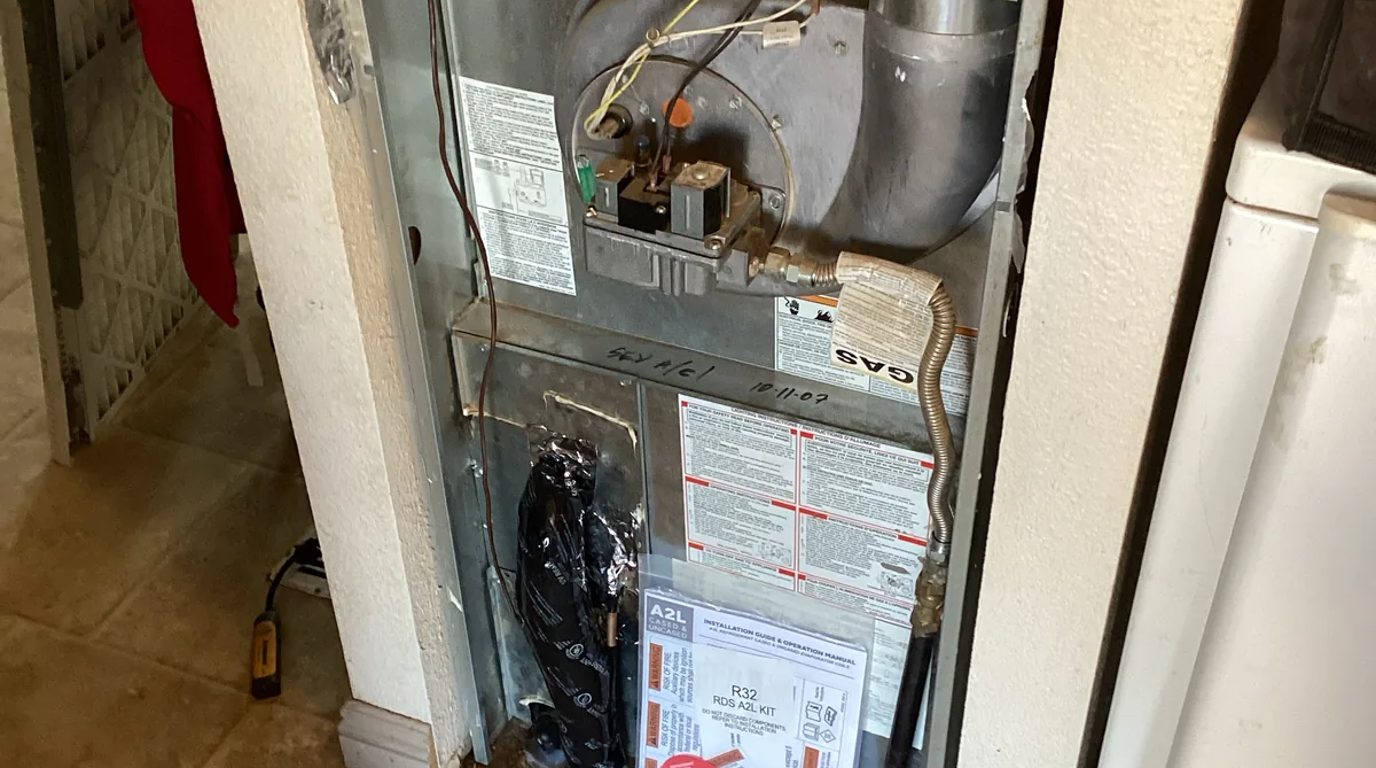
Standing pilot furnace: Open the front panel of the furnace. You’ll see a continuous small blue flame inside, near the burners. Installed mostly before 2000.
Hot-surface igniter (HSI) furnace: No continuous flame visible. At startup you’ll hear a click + see a ceramic element glow orange for 15-30 seconds before the burners light. Installed in most furnaces after 2000.
Two-sentence answer: on standing-pilot furnaces, the most common cause of recurring pilot failure is a worn thermocouple. On HSI furnaces, the most common cause of ignition failure is a burned-out igniter or dirty flame sensor. Both are inexpensive repairs.
1. Dirty or worn thermocouple (standing pilot)
Symptom: Pilot lights when you hold the reset button, then goes out within seconds when you release.
What’s happening: The thermocouple is a small temperature probe in the pilot flame. It generates a tiny voltage (millivolts) when hot, which keeps the gas safety valve open. When the thermocouple is dirty, worn, or misaligned, it doesn’t generate enough voltage. The gas valve shuts.
DIY check: Hold the reset button for 60 seconds (not 30). If the pilot still goes out when you release, the thermocouple is the issue. If it stays lit at 60 seconds but dies later, intermittent thermocouple or weak voltage.
Fix: Replace the thermocouple. $145-$245 installed. Quick service call.
2. Failed hot-surface igniter (HSI furnace)
Symptom: Thermostat calls for heat. You hear the inducer fan start. Click sound. No glow from the igniter. No ignition. After 2-3 retries, furnace locks out.
What’s happening: The ceramic HSI element has burned out. They have a 5-10 year service life. HD homes that run hard during winter cold snaps tend to burn igniters faster.
DIY check: Power off at the breaker, open the burner panel, find the igniter (small ceramic stick or paddle near the burners). If it’s cracked, broken, or visibly burned/discolored, it’s done.
Fix: Replace the igniter. $185-$320 installed. Stocked on every truck.
3. Dirty flame sensor (HSI furnace)
Symptom: Furnace ignites normally (you see burner flames), runs for 5-10 seconds, then shuts down. Repeats 2-3 times before locking out.
What’s happening: The flame sensor is a small metal rod that confirms the burner is actually burning gas. When it’s coated with oxide buildup, it can’t sense the flame properly. The gas valve shuts off to prevent unburned gas accumulation.
DIY fix possible: Power off. Pull flame sensor (1 screw + 1 wire). Gently rub the metal rod with fine steel wool or 400-grit sandpaper. Reinstall.
Pro fix: $185-$285, cleaning + replacement if cleaning doesn’t fully restore it.
4. Draft problem (any furnace type)
Symptom: Pilot lights but blows out when AC blower or any nearby fan turns on. Or pilot is unstable, flickering, weak.
What’s happening: Air movement near the burner area extinguishes the small pilot flame. Common causes: cracked or separated flue (exhaust backing in), open access panel left off, or a strong draft from a nearby door opening.
DIY check: Make sure the burner access panel is closed and seated correctly. Make sure nothing was changed in the room (water heater installed nearby, blower door test recently done, etc.).
Pro fix: Flue inspection + repair. $185-$485 depending on flue condition.
5. Gas pressure issue (propane primarily)
Symptom: Pilot is weak (small, yellow instead of blue) or won’t stay lit. Burner ignites but with weak yellow flame.
What’s happening: Gas pressure to the burner is below the manufacturer’s spec. On propane systems, this is most often a failing regulator at the tank or the second-stage regulator at the appliance. On natural gas, less common, usually a partially closed shut-off valve.
DIY check: Compare the pilot flame color to a stove burner. Stove blue = correct gas pressure. Pilot yellow = wrong.
Pro fix: Gas pressure measurement with a manometer. Regulator replacement $145-$385.
Quick reference
| Symptom | Likely cause | Cost |
|---|---|---|
| Pilot dies when reset released (standing pilot) | Thermocouple | $145-$245 |
| Click, no ignition (HSI) | Burned igniter | $185-$320 |
| Ignites, dies after 5-10 sec (HSI) | Dirty flame sensor | $185-$285 |
| Pilot blows out from nearby airflow | Draft/flue issue | $185-$485 |
| Weak yellow pilot flame | Gas pressure | $145-$385 |
When DIY is safe vs not
DIY OK:
- Relighting standing pilot following manufacturer instructions on the furnace door
- Cleaning a flame sensor with sandpaper (HSI furnace)
- Replacing batteries in a programmable thermostat
- Checking that the gas valve is in the ON position
Call a pro:
- You smell gas
- The furnace lights and then makes unusual noises
- You see soot around the burners or flue
- Carbon monoxide detector triggered
- Pilot won’t light after standard relight procedure
- Any HSI replacement (electrical work near gas)
Why annual inspection prevents most of these
Most of the failures above are detected during annual maintenance long before they become “no heat on a 22°F night” emergencies:
- Thermocouple voltage is measured, replace before total failure
- HSI resistance is measured, flag aging units
- Flame sensor is cleaned as part of the tune-up
- Flue draft is verified
- Gas pressure is measured at the manifold
Annual tune-up cost: $129. See spring AC tune-up post for the spring half; fall furnace tune-up is the other half and includes everything above.
When to call
Call 760-983-2326. Most furnace ignition problems are quick fixes, under an hour on site.
See our furnace repair page, maintenance services for tune-up scheduling, or Furnace Gas Leak Warning Signs if you smell gas.