Three things make High Desert indoor air harder than coastal SoCal: chronic dust, wildfire smoke season, and indoor combustion sources (propane in Wrightwood/Phelan, natural gas everywhere else). Each one alone is manageable; stacked together they’re the IAQ reality most HD homes face.
Two-sentence answer: most HD households benefit most from upgrading to MERV 11 or 13 whole-house filtration plus a true HEPA portable unit in bedrooms during smoke season. UV lights and ionizers are mostly noise; ventilation balancing and combustion safety are underrated.
Below is the IAQ priority list, ranked by actual impact, the same one we walk through on indoor air quality visits in Apple Valley and across the High Desert.
The HD triple threat
1. Chronic dust. Mojave dust is fine, mineral-heavy, and constant. Wind events stir it; even calm days have measurable particulate in the air. Outdoor PM10 readings in HD often run 25-45 µg/m³ on baseline days vs 10-15 on the coast.
2. Wildfire smoke season. Wildfire activity across SoCal pushes smoke into HD May through November. PM2.5 readings during heavy smoke events hit 80-200+ µg/m³ outside. Even with windows closed, infiltration brings indoor PM2.5 to 35-80 µg/m³ vs the 12 µg/m³ EPA 24-hour standard.
3. Indoor combustion. Propane furnaces, gas water heaters, gas stoves, and gas fireplaces all produce combustion byproducts. Proper venting handles most of it. Leaky venting, cracked heat exchangers, or unvented gas appliances (yes, still common) put CO + NO2 + water vapor into living space.
Most HD blog posts focus only on #1 (dust). A real IAQ strategy hits all three.
The IAQ priority stack (in order of impact)
| Priority | Action | Cost | Impact |
|---|---|---|---|
| 1 | Replace HVAC filter on schedule | $15-$60 every 30-90 days | High |
| 2 | Upgrade to MERV 13 pleated or 4-inch media cabinet | $400-$750 install | High |
| 3 | Annual furnace inspection (combustion safety) | $129 (our tune-up rate) | High |
| 4 | CO detector on every floor | $35-$80 each | Critical safety |
| 5 | Portable HEPA in bedrooms (smoke season) | $200-$450 per unit | High during smoke |
| 6 | Seal air leaks (windows, doors, attic hatch) | $50-$400 DIY | Medium |
| 7 | Whole-house mechanical ventilation (ERV/HRV) | $1,800-$3,800 install | Medium |
| 8 | UV-C light at evaporator coil | $400-$650 install | Low (HD specific) |
| 9 | Air purifier with ionizer | $200-$700 | Low to negative (some ionizers produce ozone) |
The first 4 items are the difference between “we just live with it” and “actually good IAQ.” Items 5-9 are diminishing returns.
Priority 1-2: Filtration strategy
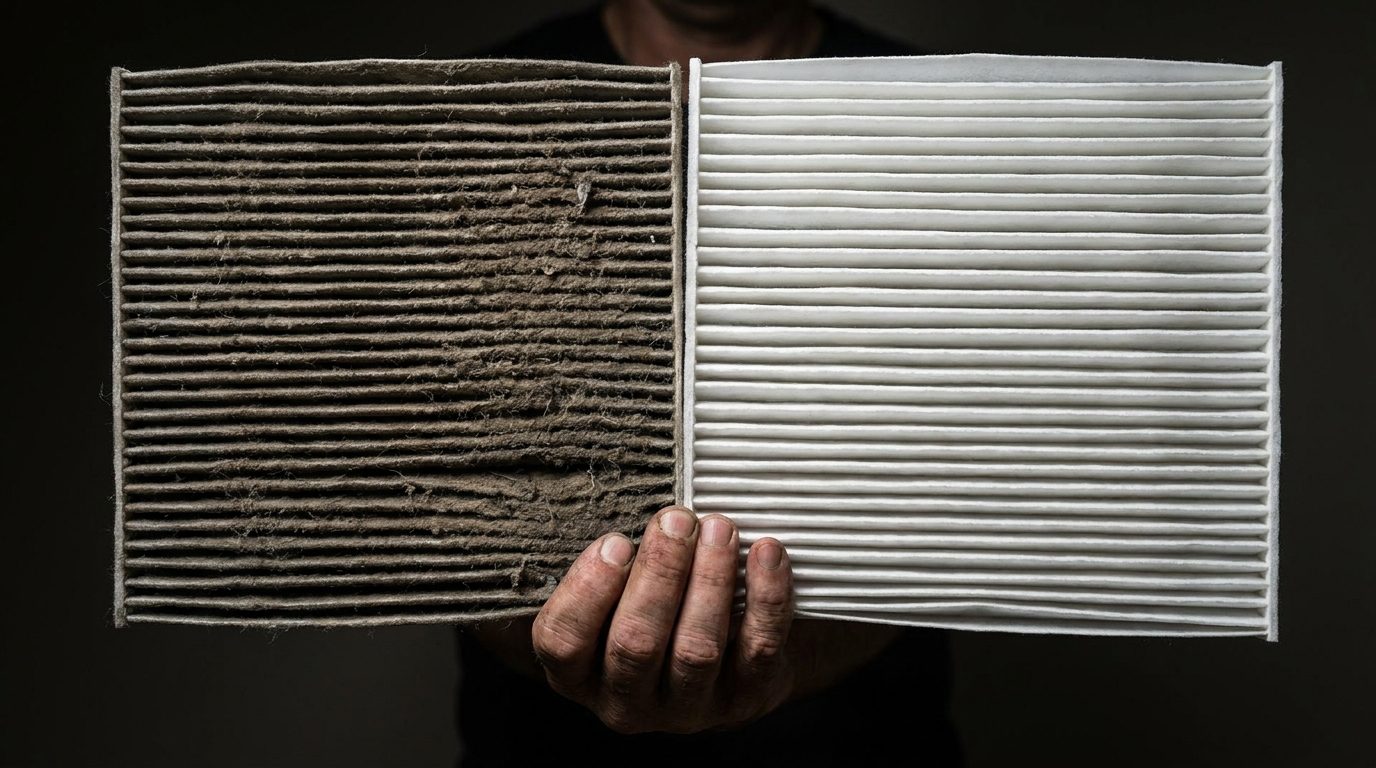
For HD homes, the filter cadence + grade matters more than any other single decision. See How Often to Change Your HVAC Filter in the High Desert for full detail.
Summary:
- Minimum: MERV 11 pleated, 1-inch, replaced every 30-45 days summer/fall, 60 days winter
- Better: 4-inch media cabinet with MERV 13 filter, replaced every 6-12 months
- During smoke events: check filter weekly, replace mid-cycle when loaded
Skip fiberglass filters and skip ionizer “purifiers” that promise to clean air without changing filters. Both are marketing.
Priority 3-4: Combustion safety
Most homeowners don’t think of furnace combustion as an IAQ issue, but it’s one of the most important.
What can go wrong:
- Cracked heat exchanger. Microscopic cracks in the furnace heat exchanger let combustion gases (including CO) leak into the airflow that gets distributed through the house. Often invisible until annual inspection.
- Blocked flue. Bird nests, debris, or partial collapse can restrict furnace exhaust. CO backflow into the home.
- Pilot light or burner adjustment. Improper combustion (yellow flame instead of blue) produces more CO and unburned hydrocarbons.
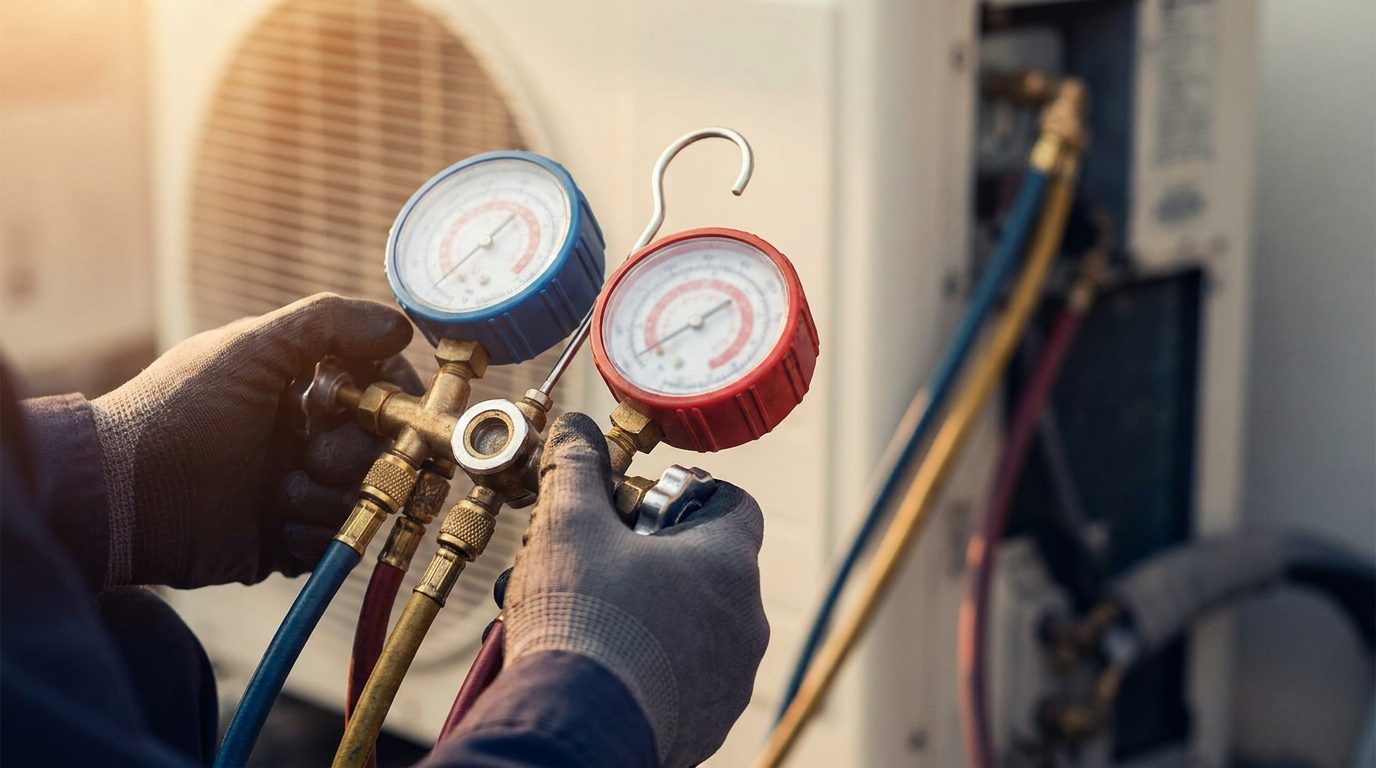
Annual furnace inspection catches all three. We do a combustion analysis (measuring CO, O2, and stack temperature) on every furnace we touch. Cost is included in our $129 tune-up. Worth it for safety; CO poisoning kills people every winter and most cases trace back to skipped inspection.
CO detectors: every floor minimum, ideally one within 10 feet of every bedroom. Replace batteries annually (test at the smoke detector battery-change time) and replace the detector itself every 7-10 years (they age out).
Priority 5: Portable HEPA during smoke season
A true HEPA portable air cleaner in the bedroom drops PM2.5 in that room by 70-90% within an hour. For sleeping during smoke events, this matters more than whole-house filtration.
Buying guide:
| Room size | CADR rating | Typical models | Cost |
|---|---|---|---|
| Small bedroom (under 200 sq ft) | 100+ | Levoit Core 300, Coway AP-1216L | $100-$200 |
| Master bedroom (250-400 sq ft) | 200+ | Coway AP-1512HH, Winix 5500-2 | $200-$300 |
| Open living + kitchen (400+ sq ft) | 300+ | Coway Airmega 400, Blueair 411 | $300-$500 |
Look for “True HEPA” certification, not “HEPA-type.” The two are not the same. Skip anything with an ionizer mode unless you can disable it (ionizers produce ozone, which is a respiratory irritant).
Priority 6-7: Air sealing + ventilation
This is the trade-off most HD homes don’t optimize. Tight homes have better filtration outcomes (less smoke + dust infiltration) but worse indoor air without mechanical ventilation (CO2, VOCs, combustion byproducts accumulate).
Pragmatic approach:
- Seal obvious leaks: attic access hatch (weatherstrip + R-13 foam), door bottoms, electrical penetrations, plumbing penetrations under sinks
- Don’t go full passive-house tight without adding mechanical ventilation
- For new construction or major remodels, consider ERV (Energy Recovery Ventilator), adds $1,800-$3,800 but balances fresh-air intake with energy recovery
For most existing HD homes, basic air sealing + filtration is enough. Full ERV is mostly for new construction.
Priority 8-9: UV lights and ionizers
UV-C lights mounted in the air handler over the evaporator coil reduce biofilm buildup. Useful in humid environments (IE cities like Riverside or Jurupa Valley where condensate humidity stays high). Less impact in dry HD where moisture rarely persists on the coil.
We install UV lights when requested but don’t push them. $400-$650 installed. Real impact is preventing future maintenance costs (coil biofilm cleaning), not improving daily air quality.
Ionizers, ozone generators, and “air purifiers with bipolar ionization”: mostly skip. Some produce ozone (a respiratory irritant); the IAQ benefit claims are weak in independent testing. EPA explicitly warns against ozone-generating air cleaners.
Specific HD scenarios
Hesperia/Apple Valley/Victorville suburban: MERV 13 4-inch cabinet, annual furnace inspection, CO detectors, portable HEPA in master bedroom. Total spend year 1: $700-$1,200.
Wrightwood propane country: All of the above + extra CO detector near furnace + annual propane appliance inspection (furnace, water heater, fireplace if equipped). The propane combustion + colder climate (closed-up house all winter) makes IAQ harder.
Phelan / Lucerne Valley rural: Heavier outdoor dust load from unpaved roads. Lean toward 4-inch media cabinet with MERV 13 from day one; 1-inch filters fill up too fast to be practical.
Riverside / IE city: Less dust, more humidity, more pollen. UV light at evap coil makes more sense here. Wildfire smoke still applies May-November.
When to call
Call 760-983-2326 for an IAQ assessment. We measure static pressure on your blower, check filter compatibility, run combustion analysis on the furnace, and recommend a specific upgrade path. No upsell on stuff you don’t need.
See our indoor air quality page, maintenance services for combustion inspection, or filter cadence post for the daily strategy.