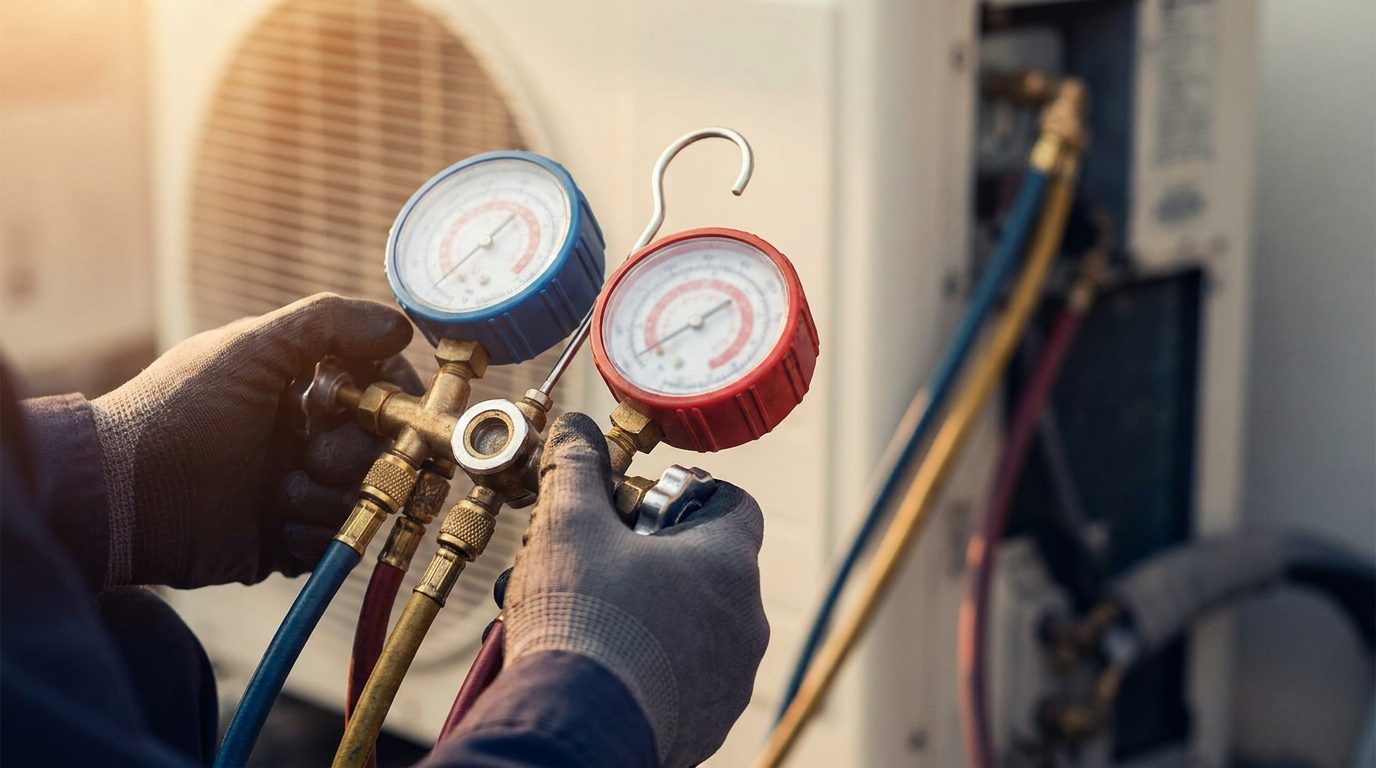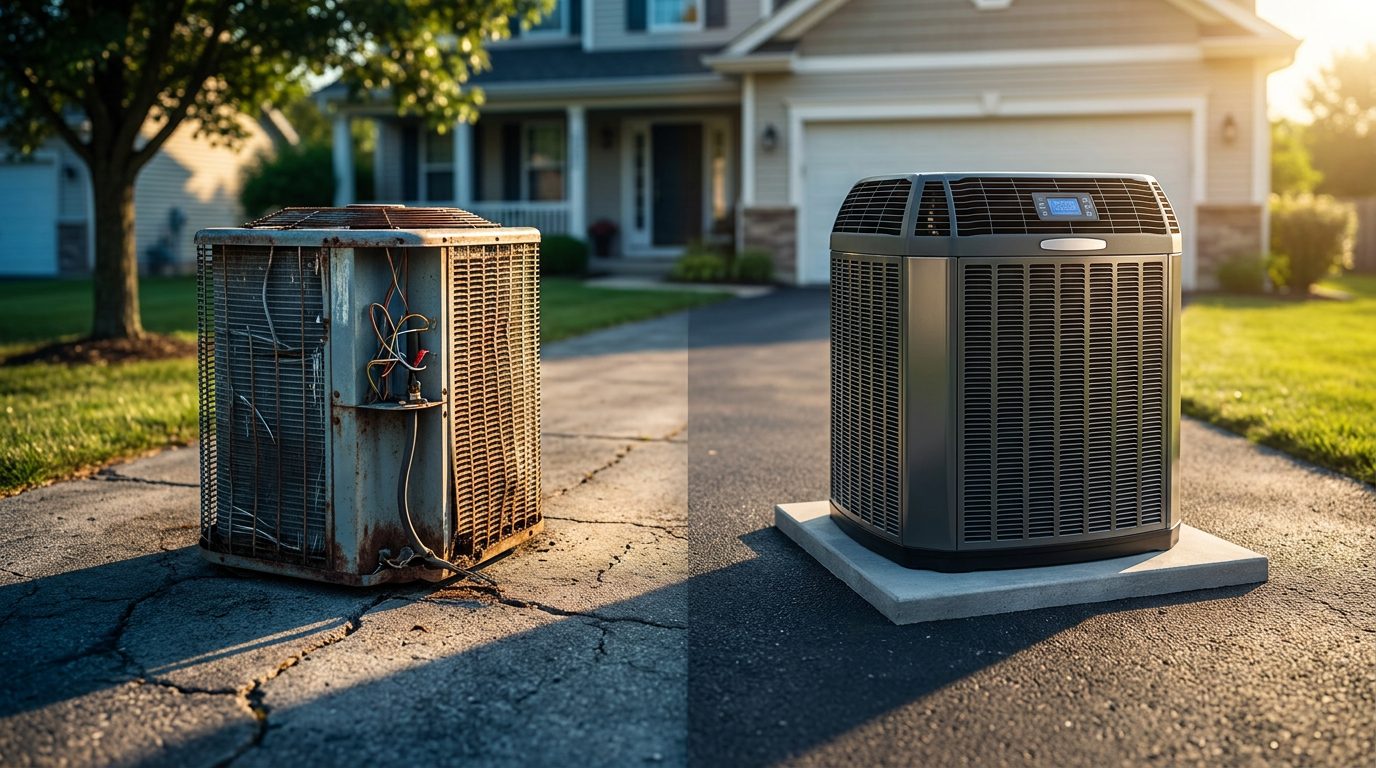

If your AC was installed before 2010, it almost certainly uses R-22 refrigerant. If it was installed 2010-2024, it likely uses R-410A. As of 2025, new equipment in California uses R-454B (A2L) refrigerant. Three different refrigerants, three different repair realities. Here’s where each stands in 2026 and what HD homeowners should know.
Two-sentence answer: R-22 is functionally end-of-life, repairs are increasingly expensive and the next major leak is usually the call to replace. R-454B (A2L) is the new standard for new installs; it requires updated technician certification and adds 8-15% to equipment cost compared to outgoing R-410A.
Below is the timeline + cost picture.
The three refrigerants in HD homes right now
| Refrigerant | Used in | GWP | Status |
|---|---|---|---|
| R-22 | Pre-2010 ACs, some 2010-2015 | 1,810 | Phased out 2020; reclaimed-only supply |
| R-410A | 2010-2024 ACs | 2,088 | Still legal, manufactured into 2024 |
| R-454B (A2L) | 2025+ ACs | 466 | Current standard for new installs |
GWP = Global Warming Potential, the EPA metric driving the phase-outs. Lower is better. R-454B is roughly 75% better than R-410A and 74% better than R-22.
The R-22 problem in HD
A lot of HD homes still run R-22. We see it on every block in 1990s-2000s tract neighborhoods in Hesperia, Apple Valley, Victorville, Adelanto. Those systems are 16-32 years old and either work fine on their original charge or have been topped off a few times over the years.
The phase-out math is brutal for R-22 homeowners:
| Year | Reclaimed R-22 price/lb | A 3-ton recharge cost |
|---|---|---|
| 2018 | $30-$50 | $180-$360 |
| 2022 | $55-$95 | $330-$680 |
| 2026 | $80-$150 | $480-$1,080 |
And refrigerant is just one cost component. A real R-22 repair (leak repair + recharge) in 2026 runs $850-$1,500 for a simple leak, $1,400-$2,400 for a coil leak that requires partial dismantling. We see homeowners hit two of these in a 12-month period before giving up.
When to replace your R-22 system
Three triggers, any of which is usually enough:
1. You’ve had one R-22 leak repair in the last 18 months. Refrigerant doesn’t disappear; if you lost charge once, the system has a leak. Repairing it bought time, but the next leak is coming.
2. The repair quote includes refrigerant cost. Anytime an R-22 system needs significant refrigerant, coil leak, line set repair, capacitor failure that ran the system dry, the math shifts toward replacement. Apply the $5,000 rule with the R-22 adjustment.
3. The compressor is making noise or running hot. R-22 systems near end-of-life often show compressor stress before failure. Replace before it strands you in a 110°F afternoon.
What replaces R-22 in 2026
For HD homes replacing R-22 equipment in 2026, the new install is R-454B. That means:
- New outdoor condenser (or heat pump) designed for R-454B
- New indoor evaporator coil sized for R-454B operating pressures
- Updated copper line set (or new line set entirely; R-454B line sets are usually compatible with R-410A specs but verify)
- New leak detection sensor on the air handler (A2L requirement)
- Technician must be A2L-certified to handle refrigerant
You cannot retrofit an R-22 system to use R-454B. The pressures are different, the lubricants are different, the safety design is different. It’s a full replacement.
R-410A, still legal but changing
R-410A is not dead in 2026, but it’s no longer being installed in new equipment. What this means for HD homeowners:
- Repairs to R-410A systems are still straightforward. Refrigerant is available, technicians know it, parts are stocked.
- Replacement R-410A equipment is no longer being manufactured. If your R-410A AC fails catastrophically and you need a full condenser swap, that swap is going to be R-454B equipment.
- You can’t mix R-410A and R-454B components. A failed R-410A condenser with a working R-410A indoor coil, you’d think you could swap to a new R-454B condenser. You can’t. Mixing pressures and lubricants damages both components.
- A2L safety hardware is required on new installs. Code-mandated.
If your R-410A system is 8+ years old, expect that the next major service will be a full system replacement on R-454B rather than a same-refrigerant repair.
What the JCE crew runs
All five of our techs completed ESCO Institute A2L certification in Q4 2024 (ahead of the January 2025 deadline). We carry:
- R-22 reclamation/recovery equipment (still service legacy systems)
- R-410A recovery and recharge gear
- R-454B handling and charging equipment with A2L-rated tools
- Leak detection sensors compatible with all three
Translation: we can service any HD home, regardless of refrigerant generation. Most local shops are A2L-certified by now; a few smaller operators aren’t and won’t touch new R-454B equipment.
Cost comparison: 2024 R-410A vs 2026 R-454B install
| Equipment tier | 2024 R-410A | 2026 R-454B | Premium |
|---|---|---|---|
| Standard (Goodman/Rheem entry) | $6,400 | $7,200 | +$800 |
| Mid (Bryant/Trane) | $8,800 | $10,000 | +$1,200 |
| Premium (Carrier Infinity/Bosch IDS) | $14,400 | $16,200 | +$1,800 |
| Heat pump cold-climate (Mitsubishi) | $16,200 | $17,800 | +$1,600 |
The premium reflects: leak detection sensor, updated equipment design, longer line set specs in some cases, slightly higher manufacturer pricing during the transition. Expect this premium to compress over 2-3 years as production scales.
Rebates work the same way
The refrigerant change doesn’t affect rebate programs. Whatever utility and manufacturer rebates are funded when you buy apply to R-454B equipment the same way they did to R-410A. Rebate funding itself has shrunk in 2026. See SBD County HVAC Rebates 2026 for the full breakdown.
When to call
If you have an R-22 system that’s older than 12 years, the next call we get from you is likely going to be a “should I replace or repair” conversation after a leak. Plan ahead, see Repair or Replace Your AC?
If you’re already past that decision and ready for a quote, call 760-983-2326. We bring current R-454B equipment options, rebate sheets, and a Manual J sizing worksheet to every estimate visit.
See our AC installation page for what we install or heat pumps if you’re going to a fully electric system.