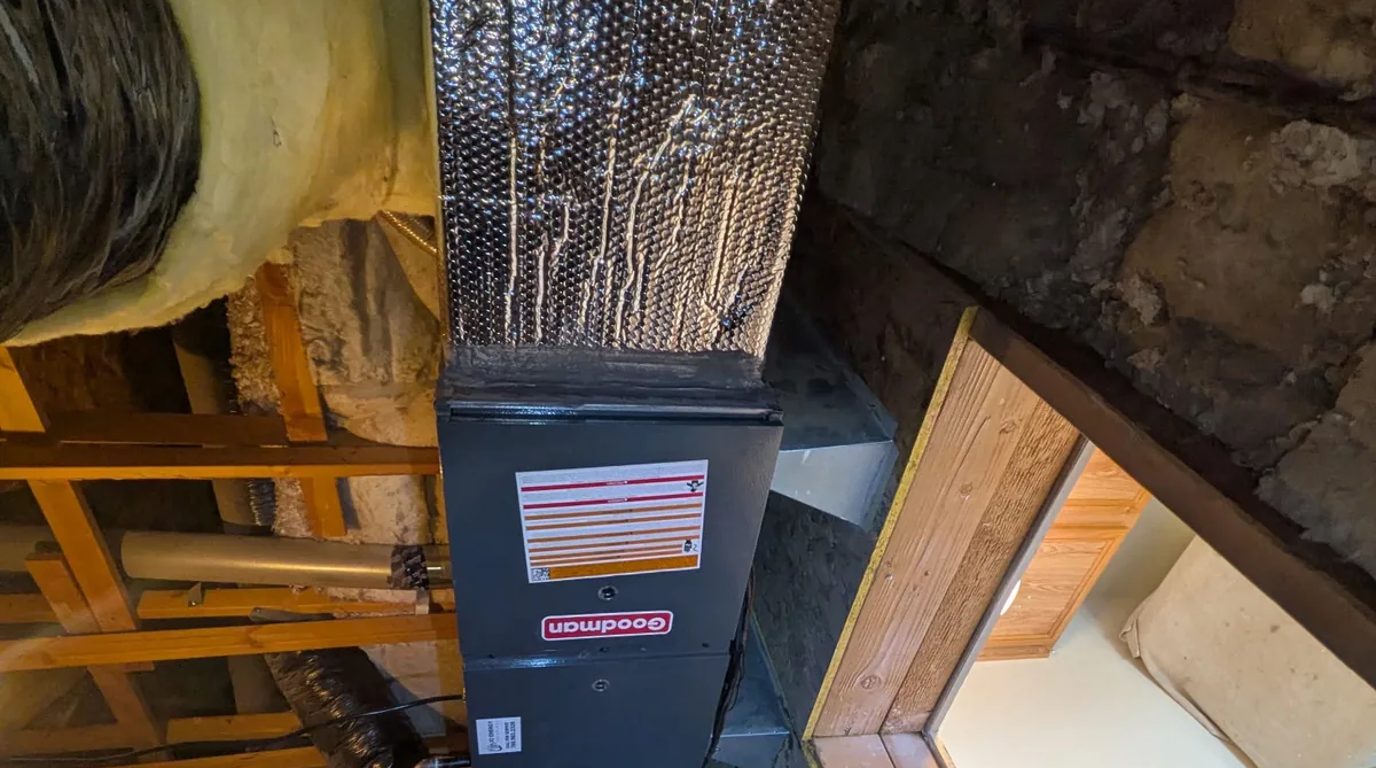
A furnace that kicks on, runs three or four minutes, shuts off, and fires up again ten minutes later is short cycling. It wastes gas, it keeps rooms uneven, and over time it is hard on the most expensive part of the furnace.
Two-sentence answer: the most common causes are a clogged filter, a dirty flame sensor, and a thermostat in a bad spot, and all three are cheap fixes. In the High Desert, the other big cause is an oversized furnace, which usually traces back to an install that skipped the load calculation.
1. Clogged filter (check this first)
Symptom: Short cycles that get worse over weeks. The air may feel hot and weak at the registers.
What’s happening: Low airflow lets the heat exchanger overheat. The high-limit switch shuts the burners off, the furnace cools, and it restarts. Mojave dust packs filters quickly, so this is the first thing we check in every High Desert home.
Fix: Replace the filter. See our filter guide for dusty High Desert homes.
2. Dirty flame sensor
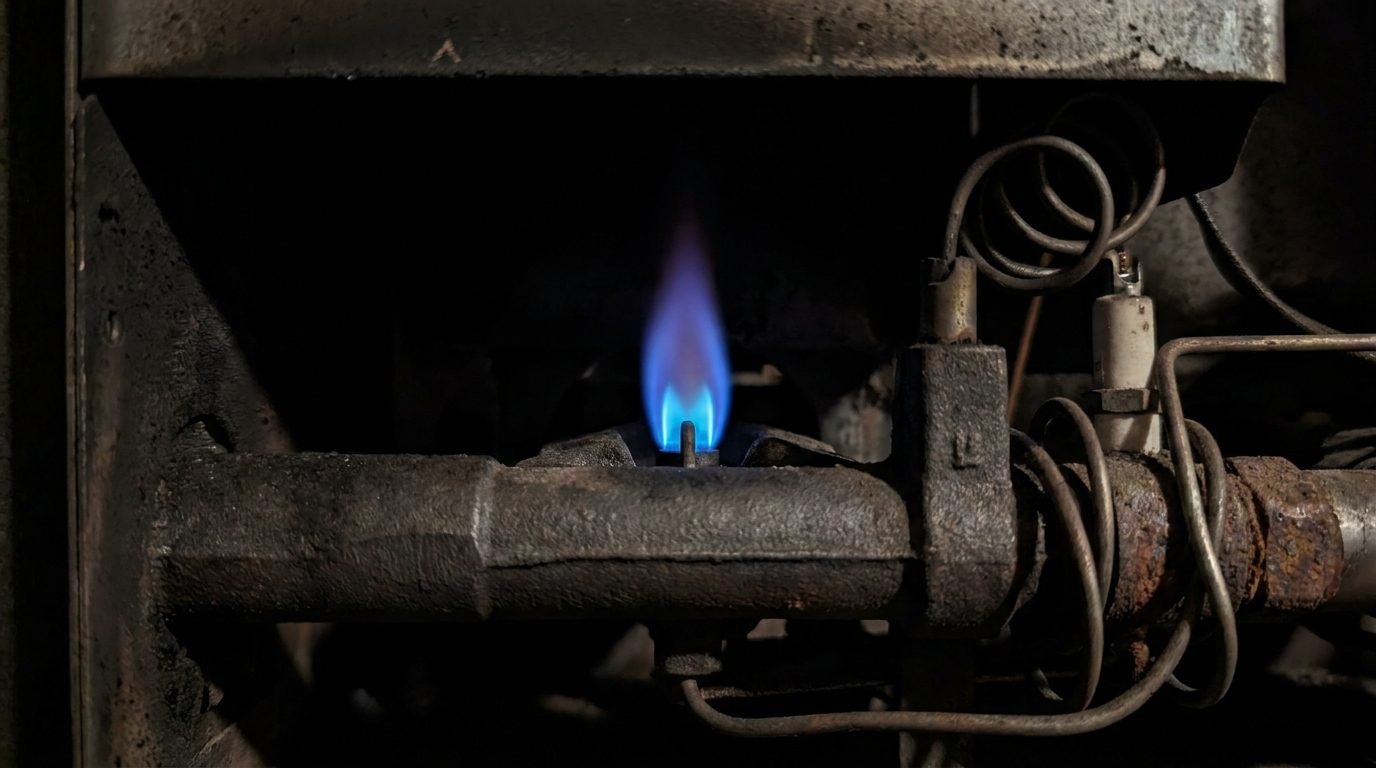
Symptom: The burners light and go out within seconds. The furnace retries several times, then may lock out.
What’s happening: The flame sensor cannot confirm the flame through its oxide coating, so the gas valve closes. It looks like short cycling, but each cycle is only seconds long.
Fix: Cleaning or replacement, $185-$285.
3. Thermostat location
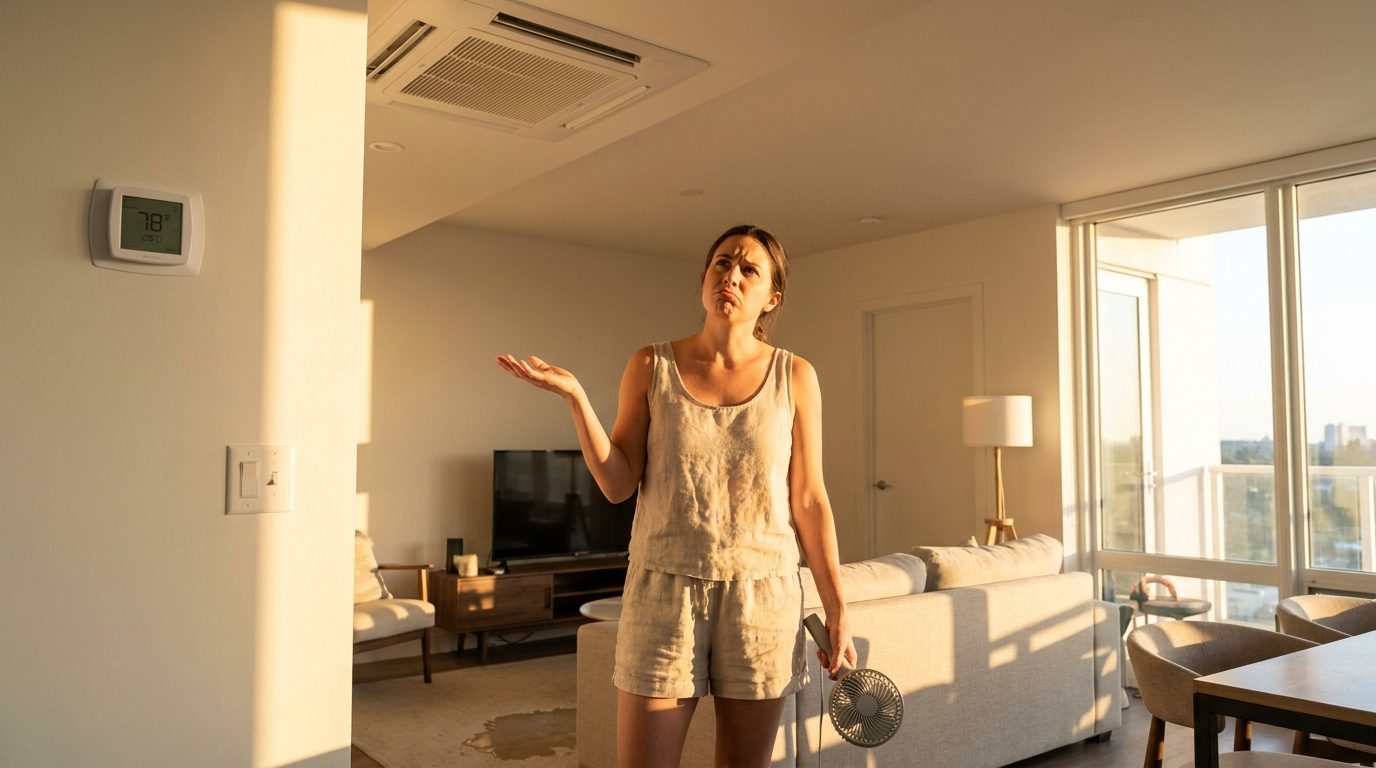
Symptom: The furnace shuts off quickly and the thermostat reads warm while the rest of the house is cold.
What’s happening: A thermostat next to a supply register, above a lamp, or on a wall that gets strong afternoon sun reads warmer than the house. High Desert winter sun is bright and low in the sky, and a thermostat on a sun-facing wall can shut the furnace off early every afternoon.
Fix: Move the thermostat to an inside wall away from registers and windows. Usually within our $150-$650 repair range.
4. Oversized furnace (the High Desert sizing problem)
Symptom: Short, hot blasts of heat. The house warms fast, the furnace shuts off, and the rooms cool again quickly. Hallways or far bedrooms stay cold.
What’s happening: A furnace that is too big heats the air near the thermostat before the rest of the house catches up, then shuts off. It never runs long enough to even out temperatures.
This is where elevation comes in. A gas furnace loses about 4% of its rated output for every 1,000 ft above 2,000 ft (NFPA 54). In Hesperia that is about 4.8%, in Phelan about 7.2%, and in Wrightwood about 16%. The right answer is a Manual J load calculation for your home, then the derate applied to the furnace you pick. The common wrong answer is a square-foot rule of thumb plus a big safety margin “for the altitude,” which lands a furnace far larger than the home needs. Our altitude guide and derate calculator show the math for each city.
Fix: On a two-stage furnace, a technician can sometimes set it to favor low stage, which helps. A single-stage furnace that is badly oversized will keep short cycling until it is replaced with a correctly sized unit. Replacement pricing is in our furnace replacement cost guide.
5. Blocked vent or intake (high-efficiency furnaces)
Symptom: The furnace starts, runs briefly, and shuts off with a pressure switch code on the control board.
What’s happening: 90%+ furnaces vent through plastic pipe. Wind-blown debris, bird nests, or snow over the terminations outside will trip the pressure switch. In Wrightwood and the higher parts of Oak Hills, check the vent pipes after every snowstorm.
Fix: Clear the terminations if you can safely reach them. If the code keeps coming back, a technician checks the condensate drain, the inducer, and the pressure switch.
6. Overheating from a failing part
Symptom: Short cycles with the limit switch tripping even with a clean filter.
What’s happening: A weak blower motor, a blocked return, closed registers, or undersized return ductwork (common in older High Desert homes) all restrict airflow. The furnace overheats and the limit switch cycles it.
Fix: Diagnostic to find the restriction. A blower motor or return-air fix is quoted on site.
Why short cycling is worth fixing
Every start heats the heat exchanger and every stop cools it. An oversized or overheating furnace can put hundreds of extra cycles on that metal every winter. Over years that stress can crack the heat exchanger, and a cracked heat exchanger can leak carbon monoxide into the air your blower pushes through the house. It is one reason we run a combustion test and inspect the heat exchanger on every furnace tune-up, especially on furnaces older than 15 years.
Short cycling also burns more gas and wears the igniter, flame sensor, and inducer faster, because those parts work hardest at startup.
Quick reference
| What you notice | Likely cause | Typical cost |
|---|---|---|
| Short cycles, weak hot air | Clogged filter | Cost of a filter |
| Burners go out within seconds | Flame sensor | $185-$285 |
| Shuts off early on sunny afternoons | Thermostat location | $150-$650 range |
| Hot blasts, uneven rooms | Oversized furnace | Setup change or replacement |
| Pressure switch code | Blocked vent or condensate | $150-$650 range |
| Limit trips with a clean filter | Airflow restriction | Quoted on site |
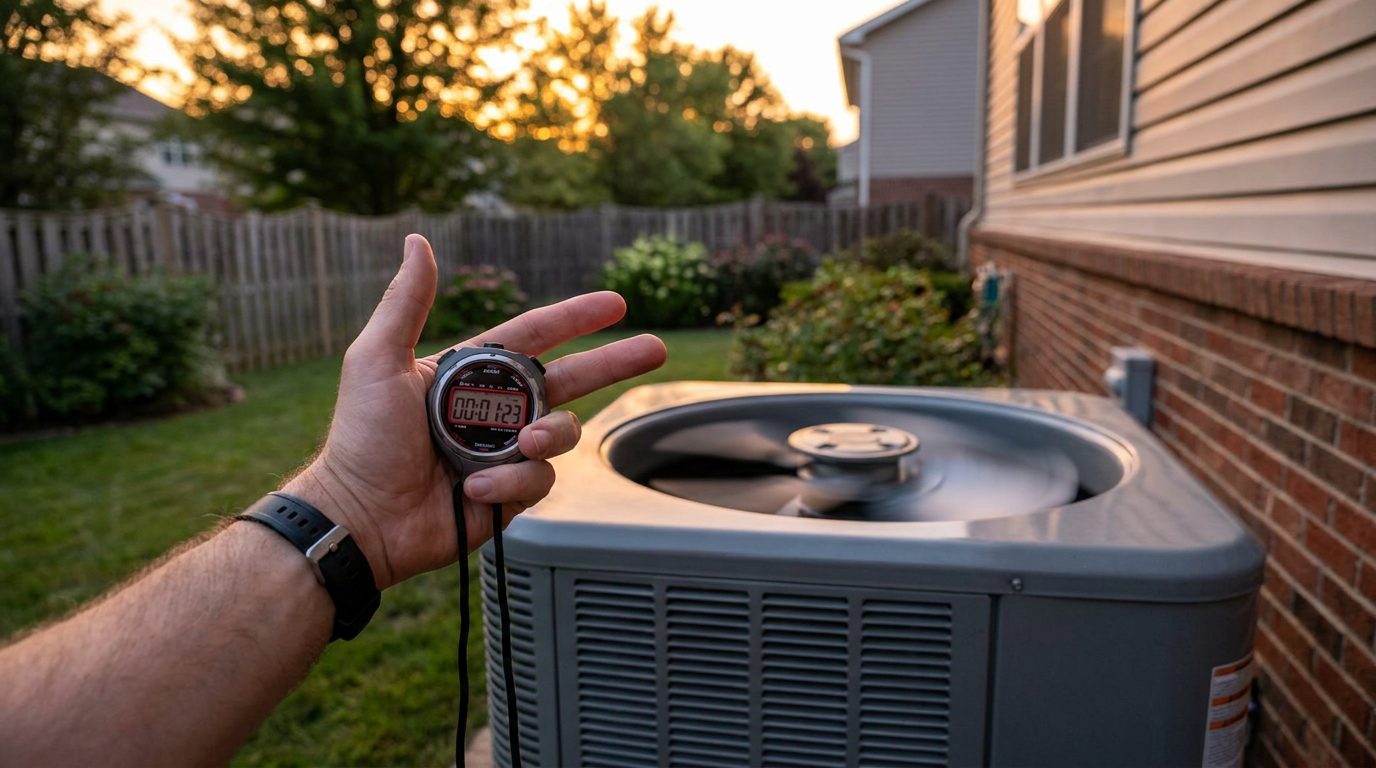
AC systems short cycle too, for some of the same reasons. See why an AC short cycles.
When to call
Call 760-983-2326 if a new filter does not fix it, if your carbon monoxide detector goes off, or if you smell gas (leave the house first). See furnace repair, furnace repair in Phelan, or furnace installation if you are thinking about replacing an oversized unit.